

Relief for law firms
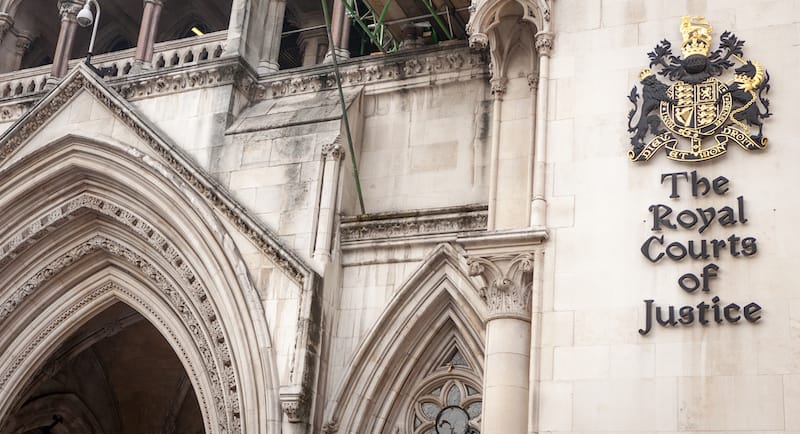
The Court of Appeal has overturned a High Court ruling that had sent shockwaves through the legal profession by finding that paralegals, trainees and legal executives could not conduct litigation, even under the supervision of a qualified solicitor.

The original decision, handed down in Mazur and others v Charles Russell Speechlys in 2025, had contradicted earlier SRA guidance, raised serious questions about the future role of junior and unqualified staff in litigation teams, and prompted firms to urgently review their processes.
But in a unanimous ruling handed down today, the Court of Appeal said the distinction drawn by the lower court between merely assisting a solicitor and conducting litigation under their supervision was simply wrong.
An unauthorised person can lawfully perform any tasks within the scope of the conduct of litigation for and on behalf of an authorised individual, the court held, provided the authorised individual puts in place appropriate arrangements for supervision and delegation. It is the authorised individual, not the unauthorised person, who is legally carrying on the conduct of litigation, and no offence is therefore committed.
The ruling vindicated the central argument of the Chartered Institute of Legal Executives (CILEX), which brought the appeal supported by the Association of Personal Injury Lawyers and the Law Centres Network. CILEX had argued that a widespread and well-regulated practice of solicitors delegating litigation work to unqualified individuals predated the Legal Services Act 2007 and that parliament had never intended the Act to abolish it.
The Court of Appeal agreed. Parliament, it said, must be taken to have understood that practice existed when it passed the 2007 Act, and the Act made no significant change to the position.
The degree of supervision required will vary, the court said. Complex or high-stakes tasks may require prior approval before anything is done, while routine work may need nothing more than regular meetings and occasional sampling of the unauthorised person’s output, falling well short of the constant direction-and-control model argued for by the Law Society and SRA.
The ruling will come as a relief to law firms and law centres across England and Wales, many of which had been left uncertain about their working practices in the wake of the original judgment.
Following the ruling, CILEX chief executive Jennifer Coupland said: “This is the most consequential judgment for legal services in recent history: It is a victory for CILEX members but also for access to justice, the interests of consumers and the encouragement of a thriving, diverse and competitive legal sector.”