
Actually got a 2:2

A solicitor has been struck off after making repeated false statements about his education and qualifications on his CV, including wrongly claiming to have obtained a first-class law degree in an attempt to secure a role at a City law firm.
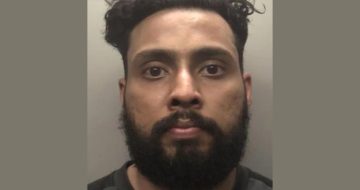
Vishal Patel, 39, who qualified as a solicitor in 2020 and was working as legal counsel at Aviva Insurance until his dismissal in 2023, submitted various versions of his CV containing what the tribunal found to be “false” details about his education, qualifications and work experience while applying for associate roles.
According to the published disciplinary ruling, the misconduct came to light after Patel applied, via a recruitment agency, for an associate role at Squire Patton Boggs. Patel was made an offer of employment, subject to pre-employment screening checks, which highlighted multiple discrepancies between his CV and his screening questionnaire.
When questioned by the firm, Patel produced a second version of his CV (which also contained “untrue” statements) and failed to provide a satisfactory explanation for the discrepancies. The offer of employment was subsequently withdrawn.
In November 2022, a partner at Squire Patton Boggs reported Patel to the Solicitors SRA, raising concerns that he had submitted “false and misleading” information in CVs on more than one occasion.
Patel later disclosed the regulator’s investigation to Aviva, which then conducted its own separate investigation. He was asked to provide both the CV originally sent to the recruitment agency and an accurate version reflecting his true background. This ‘accurate’ CV also contained inaccuracies, and Patel was eventually dismissed in April 2023.
Patel’s claims ranged from holding a first-class law degree from Aston University (though he obtained a 2:2 from Birmingham City University), to overstating his grade on the Bar Professional Training Course, and claiming he attended a private school when he was in fact state-educated.
He argued that discrepancies relating to his schooling arose because the two schools — the private school he originally claimed to have attended, and the state school he did attend — had merged. This claim was disproved by a “Google search” showing “the schools are very separate”.
In its judgment, the Solicitors Disciplinary Tribunal said Patel’s conduct involved “repeated” and “deliberate” dishonesty over a sustained period and towards multiple parties, including recruiters and prospective employers.
Patel accepted the SRA’s recommended sanction of strike-off, with the tribunal agreeing:
“[Mr Patel] had admitted dishonesty and acting without integrity, there could be no doubt that his culpability for his conduct was high and that his actions had had the potential to directly harm the reputation of the legal profession. The Tribunal found that this was misconduct of the utmost seriousness.”
While the tribunal took into account Patel’s admission of dishonesty and cooperation with the regulator, it found that the seriousness of the misconduct warranted only strike-off. Patel was also ordered to pay costs of just over £5,300.