
The Legal Cheek View
12 King’s Bench Walk (also known as 12KBW) is a leading civil law chambers, renowned for its work in personal injury, industrial disease, clinical negligence, travel and costs litigation. With over 90 barristers, including 16 KCs, the set acts for both claimants and defendants across all levels of the UK courts. Its reputation also extends well beyond these shores, with barristers regularly instructed on cases involving accidents abroad.
“The variety of work at 12KBW is nothing short of brilliant,” one tenant tells us, and looking at the breadth of what the set handles, it is hard to disagree. Tenants can find themselves working on anything from Ministry of Defence claims for noise-induced hearing loss to neighbour disputes over rights to light. The practice areas are also evolving. “12KBW continues to diversify into fascinating new legal markets: AI, drones, travel law, data protection, sports law,” one junior reveals. The client base is equally diverse. As one personal injury junior puts it: “my clients have had a whole range of life experiences, from veterans who have fought for the country to trainee ballet dancers.”
Personal injury (including cases with an international dimension) and industrial disease remain central to the set’s identity. Tenants handle everything from minor road traffic accidents to Supreme Court cases grappling with complex questions around the scope of duty under consumer protection regulations. “We’re on the cusp of changing the law in some areas,” one tenant tells us. “I genuinely find it exciting.” Employment and discrimination law also feature prominently, with particular expertise where these fields intersect with personal injury. For workplace stress claims or discrimination arising from an industrial accident, 12KBW is very much the set to call.
The past year has brought no shortage of high-profile matters. Michael Rawlinson KC represented the family of former Manchester United defender Gordon McQueen, with the court finding that heading footballs had likely contributed to his death. Andrew Roy KC acted for midwives in a High Court appeal concerning psychiatric injuries caused by the traumatic ambulance transfer of a newborn baby. James Pickering, meanwhile, was instructed in the military deafness group litigation, in which 3,500 current and former service personnel successfully sought damages for hearing loss and tinnitus sustained during training exercises. And that is just a handful of examples!
Juniors are by no means left on the sidelines. One tells us there are “excellent opportunities to challenge yourself as a junior with complex factual and legal issues,” though another in their first few years of practice is candid that “some of the baby junior work (lolling around the small claims court, arguing about credit hire) can get tedious.” It cannot, after all, always be Supreme Court appearances and meetings with Premier League football clubs.
Even when juniors are not being led by KCs on major cases, support is close at hand. An open-door policy runs throughout chambers, and tenants are quick to make use of it. “I literally WhatsApp queries and questions to the silks when I’m puzzled on a difficult point!” one junior tells us. The atmosphere this creates comes through clearly in how tenants describe the set. “We are like a close-knit family where we look out for each other and the wellbeing of everyone, members and staff alike,” one says. A member who trained elsewhere adds that the friendliness of the set is something they know “is not to be taken for granted.”
That same ethos shapes the approach to work-life balance. Barristers are realistic that the bar will never be entirely stress-free, but tenants broadly feel that the balance is theirs to strike. One acknowledges that “the bar is a stressful profession that impinges constantly on your personal life,” while another reports taking “buckets of holidays a year” and rarely working weekends. There is “not a lot of pressure from clerks,” and conversations about workload and wellbeing are actively encouraged.
Socially, the set has a genuine warmth to it. Tenants regularly meet for lunch or drinks after work, and friendships form across all levels of seniority. Organised events, including regular chambers tea and the annual Christmas party, help bring people together, though we hear that the social calendar has been somewhat slower to recover since the pandemic.
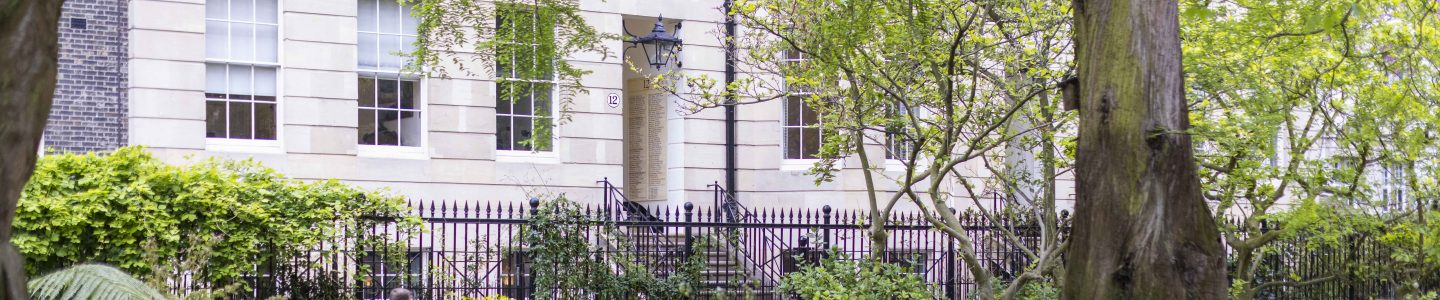
As for the premises, 12KBW is well-placed in the heart of Inner Temple. The main building looks out over Temple Gardens, and some barristers enjoy views across to the Thames. The exterior draws admiring comments, but the interior inspires more mixed feelings. Some tenants describe it as simply “dated,” while others are blunter, with one noting “client-facing conference rooms that look like they were last done up in the 90s by someone who didn’t care very much.” On a more positive note, significant improvements have already been made to the public areas, and further renovations are planned. Views on IT provision are similarly varied, ranging from “minimal” to “fantastic,” with the set said to be actively working towards a higher standard.
12KBW offers up to three pupillages per year, each carrying an award of £85,000. Pupils rotate between three supervisors over the course of the year and, we are told, “work on complex and high-level cases from the outset,” with detailed feedback throughout. During the first six months, work is focused on the supervisor; in the second six, pupils begin taking on work for other members of chambers and handling their own cases.
One former pupil captures the experience well: “I certainly felt lucky compared to friends at other chambers. The emphasis was very much on education and development first. Assessment is an obvious part of any pupillage, but it didn’t feel like a bear-pit. Supervisors were supportive and there was a strong sense across chambers that people want the pupils to succeed.” Each pupil is also assigned a junior tenant as a mentor. Training continues beyond pupillage, with the set running seminars that members are encouraged to attend.
Applications are made through Pupillage Gateway. Around 30 candidates are invited to a first-round interview, which takes the form of an oral presentation to a panel of three. Candidates select a recent case and present it as an application for permission to appeal, then take questions from the panel. The strongest performers are invited back for a second-round interview in a more traditional format.
12KBW is looking to recruit “first-class pupils who will be able to strengthen their areas of practice,” and is committed to diversity in doing so. Alongside its standard mini-pupillage programme, the set offers social mobility mini-pupillages specifically designed to “improve access to the profession and enable excellent students from under-represented backgrounds to embark on careers at the bar.”