
Skip to content

4 New Square Chambers

The Legal Cheek View

Leading commercial set 4 New Square Chambers has expertise in commercial litigation, costs, and insurance, as well as being a heavyweight in areas such as professional negligence, sports law, and construction, to name but a few. Legal geeks will know that Sir Rupert Jackson, famous for architecting major reforms of the civil justice system, is a member of 4 New Square. His presence underlines the calibre of the set, which has 101 members, of whom 35 are KCs.

One junior at 4 New Square describes a “great spread of work including some very high-profile cases”. The broad range on offer ensures pupils and baby juniors can build up a wealth of experience, while more senior practitioners can carve out their specialties. The variety is striking: everything from £1 billion commercial disputes and high-profile human rights cases to battles for Premier League football teams, with a solid supply of interesting professional indemnity work throughout. Another junior echoed this sentiment, telling LC: “One week I might be in the High Court for a strike-out application, the next I might be appearing pro bono for a pro tennis player disqualified for match fixing. Every day is different, and that’s the joy of the job.”

Tenants at 4 New Square are not only working on cases within England and Wales but are also busy internationally. In the public international law sphere, work has included challenges to UK sanctions imposed on an Iranian bank, representing a leading European bank in a property rights dispute before the European Court of Human Rights, and advising the Republic of Serbia in proceedings before the International Court of Justice on the legality of Kosovo’s declaration of independence. The set’s international reach is further reflected in its civil fraud practice, which spans multi-billion-dollar asset recovery, fraud and conspiracy claims across jurisdictions. Many members are called to the Bar in multiple jurisdictions, with several also holding academic posts teaching public international law at leading universities worldwide.

Continue reading

Sports law is another standout area. The set’s arbitration expertise is clear, with tenant Diarmuid Laffan appearing before the Court of Arbitration for Sport in high-profile anti-doping disputes, including the appeal concerning Swedish top-100 tennis player Mikael Ymer. But chambers’ offering goes well beyond disputes, with members regularly advising governing bodies on constitutional, funding and regulatory issues, as well as drafting selection, disciplinary and anti-doping policies. Many barristers also sit on key bodies including the Court of Arbitration for Sport, the National Anti-Doping Panel and Sport Resolutions, with senior roles such as Graeme McPherson KC’s appointments to the cricket discipline panel and the Premier League’s Judicial Panel. Recent highlights include Kendrah Potts’ representation of West Ham footballer Lucas Paquetá in his successful defence of FA spot-fixing charges, while direct access-qualified members mean chambers is well placed to act for athletes, clubs and governing bodies alike.

We are told that this exciting work, while often undertaken by more senior members, benefits chambers as a whole. “The 30-odd top commercial silks in chambers generate high quality work for busy juniors, and vice versa. It all contributes to a hugely optimistic feeling of a chambers going from strength to strength”, one insider tells us. Juniors also report a “great mix” of led and unled work, with good opportunities for “regular court appearances for advocacy experience”.

Members have also been involved in some of the most significant group litigation of recent memory, including Merricks v Mastercard (concerning overcharging fees), Dieselgate (relating to car emissions), and a case against Apple regarding its alleged monopoly. Chambers is equally active in the fast-evolving tech space, with members involved in the headline-grabbing Crypto Open Patent Alliance v Wright, the ‘Satoshi Nakamoto’ litigation on the claimed identity of Bitcoin’s creator. The set is also increasingly engaged with AI-related issues, including R (Ayinde) v London Borough of Haringey and related disputes over suspected AI-generated material and professional conduct.

With such significant cases coming through the clerks’ room, there are “plenty of people to bounce ideas off”, with a “senior person willing and able to help with every worry one might have”. There is a “real sense of camaraderie” within chambers, with one tenant who moved from another set saying that 4 New Square is in a “different league” to their former home. Another insider candidly reveals that “4 New Square is a truly inclusive, supportive working environment”, which they personally “recently benefited enormously from”. As one tenant neatly put it: “This is a collegiate set. It’s not just an open door culture — people actually have their doors open, and are willing to give advice from the most senior silks on down.”

4 New Square’s commitment to inclusivity is also highlighted by it being a signatory to the Women in Law Pledge, a cross-organisation collaboration between the Bar Council, the Law Society, and CILEX to support the progress of women in senior roles. During pupillage, pupils are assigned a mentor who supports them on a strictly confidential basis, ring-fenced from the pupillage assessment system. The mentoring doesn’t stop there. Junior barristers can also choose to receive guidance from up to two mentors during their first few years of tenancy.

There is no escaping the fact that life at the bar can be demanding, especially at a leading commercial set like 4 New Square. Nonetheless, genuine effort is made to “actively encourage” a good work/life balance. “I like working hard and then relaxing completely, and chambers helps me to do exactly that. There is no pressure to do more than I want to do,” reports one insider. The clerks are said to be particularly supportive, keen to help barristers find a sustainable balance, while silks will insist that juniors switch off their emails when on holiday. An active wellbeing committee adds further structure to this culture, though there are still “inevitable compromises” to be made when practising at such a heavyweight set.

It isn’t all work, however. Whilst views on the social life are somewhat mixed, 4 New Square offers a weekly pilates class, charity runs, and more traditional lunches, drinks evenings and Thursday afternoon cake and tea. Summer and Christmas parties are regular fixtures, as are silks’ parties, which we’re sure are very glamorous. Client events are also common. One tenant who prefers to spend downtime at home nonetheless speaks of “rich and rewarding long-term friendships with colleagues”. Who says it’s lonely at the bar?

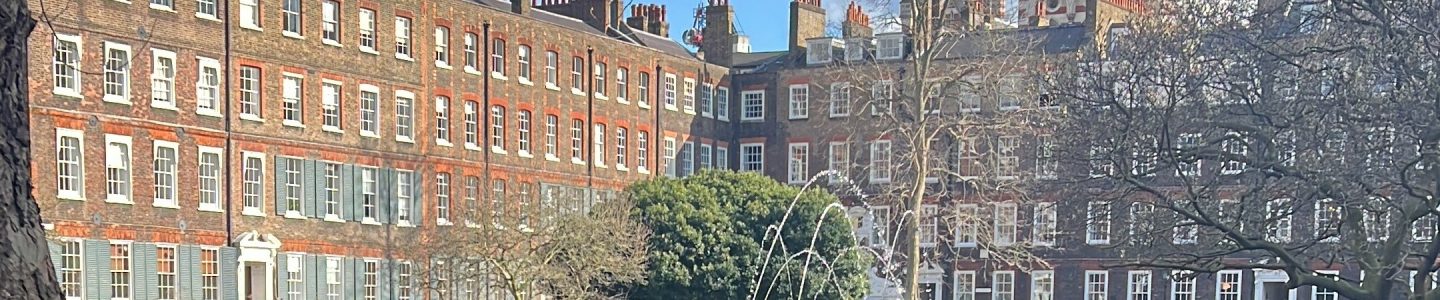
As for the building itself, 4 New Square’s two premises sit in Lincoln’s Inn, described as a “great combination of stately splendour with all modern cons”. Each barrister is offered their own room, which we’re told are “gorgeous”. Planning restrictions on the listed building do draw the occasional complaint (“single glazing isn’t the best solution to an English winter”, notes one chilly junior) but this is “more than made up for by the chance to work in handsome buildings overlooking one of London’s historic squares.”

Alongside its beauty, 4 New Square is “exceptionally well equipped”, with IT provision described as “first rate”. One insider told us: “After several years of hard work, software rollouts and security upgrades, the IT team at 4 New Square is now a market leader at the bar and, in my humble opinion, is setting the standard for other sets.”

Aspiring barristers with their heart set on 4 New Square will be competing for one of four pupillages on offer each year, on average. Applications are made through the Pupillage Gateway. Those who score highest on their paper application are invited to a short first round, with the most successful candidates then progressing to a more extensive second-round interview before a panel.

4 New Square looks for candidates who can demonstrate intellectual ability, oral and written advocacy skills, personal qualities such as reliability and integrity, and genuine motivation to succeed at the bar. The set emphasises that it recruits on merit alone, irrespective of background, and participates in COMBAR’s mentoring scheme for underrepresented groups at the bar.

Once you’re in, the pupillage programme is described as “well designed, transparent and professional”, with supervisors highly praised. One tenant reflects: “I was trained by three outstanding pupil supervisors. One of them is now the Lord Chief Justice!” With a practising second six, pupils have the opportunity to get on their feet roughly once a week and build their skills steadily. While tenancy is not guaranteed, the pupillage is designed to develop each pupil to the required objective standard. As one former pupil puts it: “Pupillage at 4NS is very thorough. You get a lot of feedback on your work and have to complete some fairly challenging formal assessments. You come out of the process with a very good grounding in the fundamentals of legal practice, which is a great platform to build from. I get the feeling we get in court a little more than other commercial sets, which is another plus, because there is no substitute for it when it comes to improving your advocacy.” For a first-hand account, the set’s own podcast features several former pupils discussing life as a pupil at 4 New Square.

What The Junior Barristers Say

Nicholas West

Your journey to pupillage

I did an undergraduate degree in French and Spanish at the University of Oxford from 2018 to 2022. While on my year abroad, I volunteered at law firms in Paris and Barcelona to get a bit of legal experience, though I’m not sure how useful I was! In my final year of undergrad, I applied and got into the Graduate Diploma in Law course at City, University of London (now City St George’s), which I began in September 2022.

During the GDL year I applied for pupillage at fifteen commercial chambers, including 4 New Square. In order to improve my CV I did six mini-pupillages at chambers I was applying to in my first term of the GDL. I also participated in internal and external moot competitions (in my case the EU Law Moot Competition, which I would strongly recommend) and did some marshalling with HHJ Barbara Mensah at Wood Green Crown Court.

To be frank, the pupillage application process and all the activities I was doing to improve my chances in it became the main event of that year and I fit in my GDL studies where I could. It was nevertheless an intense but fascinating studying experience and reinforced my eagerness to be a barrister. Once I had secured pupillage I could rest a bit easier but nevertheless had to work hard for my GDL exams.

In the 2023/4 academic year, I did the Bar Vocational Studies course at City, which I also enjoyed and thought was well-organised. That being said, the workload is not to be taken lightly and I would encourage students to begin preparation for the exams early (certainly earlier than I did!) especially if they are also applying for pupillage during this period, as the amount of content to be learned — in many instances by rote — is considerable.

In the five months between my final BVS exam and pupillage I went travelling across Europe on my own, with family and with friends. This may not sound especially relevant but I would very much advise that, if you are able to do so, you spend the period before pupillage making the most of your time and freedom. While pupillage and a career at the Bar are enjoyable and rewarding experiences, they involve an inherent degree of stress, routine and heightened responsibility which one does not always have beforehand.

Continue reading

My Pupillage Experience

I chose 4 New Square for three main reasons. Firstly, I was drawn to commercial work and impressed by the burgeoning reputation of 4NS in the world of commercial law. Secondly, my mini-pupillage at 4NS, as well as the mooting workshop organised at City, had given me an insight into the kind and welcoming culture in chambers and the excellent level of work that members are engaged in. Thirdly, the broad variety of cases that chambers is involved in (involving sports, general commercial, insurance, arbitration, costs and public international law, to name a few) appealed to me as a young student who wanted to retain the flexibility to sculpt my career as I learned more about these areas and avoid pigeon-holing at an early stage.

Before I began pupillage, I met with my first supervisor and was given an introduction into the sort of work I was going to be seeing and doing in my first seat. During the pupillage year, I sat with three supervisors, all of whom were exceptionally talented while managing to train me with tact and understanding. The majority of the assessment process was carried out by those supervisors, who graded every piece of work I did for them (save for the first one, which was treated as a trial run to get started with). Each piece of work and grade was discussed in detail, which helped me to ensure I was improving at every stage of the process.

There were also centrally-set assessed pieces of work which were provided by other members of chambers in order to gain an understanding of my ability and that of my co-pupils. Four of these centrally set tasks were written tasks (e.g. advices, skeletons etc.) which we had 32 hours to complete (9:00 on one day until 17:00 on the next). We would then submit these and have a graded discussion on them with the member of chambers who had set the task. We also did two assessed moots (mock trial speeches in front of a judge or senior member of chambers) for which we had to prepare skeleton arguments a week in advance.

The work I saw with my supervisors was varied and of a very high level. Among many other cases, I worked on and attended a major intellectual property trial in the High Court, a valuers’ negligence mediation, a costs hearing in the Court of Appeal and the seminal Iconix v Dream Pairs hearing in the Supreme Court. The assessed work I was set by my supervisors covered the range of drafting which barristers are expected to produce in practice, including advices, skeleton arguments, particulars of claim, defences and witness statements.

In the middle and at the end of each three-month period of pupillage we had meetings with the Head of Pupillage and the Senior Clerk to discuss our progress and any points of feedback we would like to give. The transparency of this process was very helpful, as it allowed me to have a good idea of where I stood and what I needed to do to meet the high standard required of me by chambers.

In my second six months of pupillage I began practising as an independent barrister, both on my own and led by other members of chambers. The unled work generally involved small-value county court hearings relating to road traffic accidents, personal injury and minor commercial disputes. Though not particularly glamorous, these opportunities are essential for any good barrister to hone their advocacy and trial preparation skills. The led work included being instructed in an urgent interim injunction application in the High Court in an e-sports case, which was a highlight of my pupillage year.

In late June, I was told by the Head of Pupillage that the Pupillage Committee would be recommending me to chambers for admission to 4 New Square, and the decision was confirmed in early July. The remaining three months were spent doing some work with my final supervisor and transitioning over to independent practice as a fully-fledged member of chambers, which began in earnest in early October.

The transition from pupil to tenant

The transition from pupil to tenant brings its own set of challenges, but they are very much mitigated by the support provided by chambers. In the latter stages of pupillage and first few months of tenancy, the administrative staff in chambers helped explain to me the various bureaucratic matters that needed my attention and my clerks explained what sort of work I would be seeing in my first months and years as a ‘baby junior’.

One of the major benefits of tenancy is a sense of freedom and independence. You are ultimately in control of your own timetable and could in principle organise your work schedule as you see fit, though it is likely most effective and healthy to maintain good work-life boundaries and a stable routine. With that independence comes responsibility for matters such as your tax affairs, your professional liability insurance and your practising certificate. These are all points on which chambers staff and other barristers are happy to provide advice and help where needed, though it is best to become organised and self-sufficient.

As a young barrister, you are placed in a room with more experienced members of chambers so that your learning process can continue both passively and actively from them. I have found the members I sit with very receptive to my questions (of which there have been a large number!) and keen to chat through problems or go for coffee when we are both working in the office. Now, almost a year into tenancy, I am still learning as I go, and I am sure that will continue for a long time, if not my whole career.

What is your practice like now?

I have a varied and interesting practice. In terms of areas, my work covers a broad range, from general commercial to civil fraud, costs and professional negligence. Every three months each barrister has a professional development meeting with their clerks, the Senior Clerk and a mentor. In my case, this was one of my pupil supervisors who has kindly agreed to provide professional and personal support to me in the early years of my career.

The size of case on which I am instructed could be subdivided generally into three levels. The smallest cases (with values typically between £10,000 and £200,000) I handle alone. This can include County Court or, more rarely, High Court hearings, advices, statements of case or other drafting. The next level (between £1 million and £5 million) are cases where I am led by one or two other barristers. These include medium-sized fraud and costs cases. The largest case I have been involved in has a value of approximately £1 billion, and involves allegations of fraud and bribery against a large international commodities company. In that instance, I was the most junior on a large team of barristers, helping out on a number of tasks including drafting research notes and conducting document review.
All these styles of work have their benefits and challenges, but the variety means that there is never a dull week and my clerks ensure I maintain a healthy and productive rhythm to my work schedule. I typically have anywhere from 3 to 7 cases going at any one time so there is always plenty of high-quality work to do. I’m also in court a few times a month, which is the perfect amount for me to feel that I’m acquiring enough experience and feeling able to properly prepare for each hearing while not becoming overwhelmed.

What is the culture of chambers?

I have found the culture of chambers very warm and positive. Chambers organises regular lunches, tea-and-cake meet-ups, events and drinks gatherings. It is up to you how much you wish to engage with those opportunities, but I have enjoyed getting to know other people in this way and on more than one occasion have been brought into an interesting case by virtue of conversations I’ve had at these get-togethers.

The support staff and clerks are fantastic. They have patiently answered my questions on many occasions and we all maintain a very friendly working environment. The clerks have a great deal of wisdom about the functioning of the legal system so I’ve found that it’s valuable to listen to their recommendations. Even so, I’m very much the master of my own practice and I’ve found that my clerks are keen to be guided by the sort of career I want to develop.

Top tips for those wanting to become a barrister/secure a pupillage at your chambers

The main tip I would give would be to think about the application process from the perspective of chambers. What are they going to be looking for? The key points are: (1) academic excellence, (2) relevant experience or demonstrations of interest/aptitude in the areas of law in which 4 New Square specialises, (3) advocacy skills and (4) work ethic and tenacity. If you feel you are lacking in one or more of those areas, do what you can to fill that gap or excel in another area to compensate.

Advocacy experience in moots, debating or pro bono programs like the Free Representation Unit is very valuable, as are mini-pupillages. Ultimately, however, 4 New Square is looking for people with the potential to be excellent advocates. It is not the end of the world if you are just starting your legal career (as I was when I applied).

When you do apply, cast your net widely but with caution. There is a great deal of unpredictability to the application process, and if you can send high-quality applications to a number of chambers, you will be improving your chances significantly. That is not to say you should adopt a scattergun approach or apply for the sake of it. Chambers will want to see that you have put thought into the application, done your research, and come to a sensible conclusion as to where you will thrive.

Deadlines

Mini-Pupillage

Winter 2026-7
Applications open 30/04/2026
Applications close 21/10/2026

Pupillage

Applications open 04/01/2027
Applications close 28/01/2027

Insider Scorecard

A*
Training
A*
Quality of work
A*
Colleagues
A*
Facilities
A
Work/life balance
B
Social life
A*
Legal Tech

Insider Scorecard grades range from A* to C and are derived from the Legal Cheek Junior Barrister Survey 2025-26 completed by barristers at the set.

Key Info

Juniors 66
KCs 35
Pupillages 4
Oxbridge-educated new tenants* 2/5

*Figure is for the five most junior members of chambers; does not include postgraduate studies.

Money

Pupillage award £90,000
Bar course drawdown £30,000

For the drawdown, £10,000 is paid upon offer acceptance.

Diversity

Female juniors 23%
Female KCs 20%
BME juniors 20%
BME KCs 12%

The Chambers In Its Own Words