
The Legal Cheek View
When it comes to tax, Gray’s Inn Tax Chambers (GITC) is one of the first sets to turn to. Established in 1965, this small, specialist set has just 14 members and is often said to outsmart the Magic Circle on tax law. Talent runs deep: GITC is home to no fewer than five leading tax silks.
Members act for both British taxpayers and HMRC, in advisory and litigious capacities alike, and their expertise extends to cross-border and international matters. Tax may not strike most law students as the most exciting area of practice, but one junior reassures us it is in fact “endlessly fascinating.” Working in tax law, we’re told, is “like being paid to do crosswords and sudoku for a living.” The consensus here is that both the field and the work are of the highest quality.
Advisory work is plentiful at the tax bar, but that doesn’t mean you’ll never see a courtroom. Much of the litigation takes place in the tribunal system, yet members also appear in the Administrative Court and have diaries full of appellate bookings, right up to the Supreme Court. Cases have spanned trademark infringement, offshore drilling, commercial construction and hotels, and touch on any and every tax you can think of, plus plenty you’ve probably never heard of.
Given the reputation of its tenants, the work that comes GITC’s way is often extremely high in value. As one member puts it: “Having the best people brings in the best work.” Recent cases also show just how strange and far-reaching tax law can be. Michael Firth KC appeared in Northumbria Healthcare NHS Foundation Trust v HMRC, a major Supreme Court VAT dispute over whether NHS trusts must charge VAT on hospital car parking, with up to £100 million reportedly at stake across similar claims. He also acted in Hotel La Tour v HMRC, another Supreme Court VAT case, this one over whether professional fees linked to the sale of a luxury hotel subsidiary could be deducted. And if that all sounds too corporate, fear not: Firth has also appeared in Graham t/a Skin Science v HMRC, a dispute over whether Botox, acid peels and other treatments counted as cosmetic or medical for VAT purposes.
Elsewhere, Sam Brodsky has acted in Story Terrace v HMRC, a case turning on whether the supplies of a memoir and ghost-writing business were zero-rated books or taxable ghost-writing services. Brodsky also appeared alongside Nicola Shaw KC in The Tower One St George Wharf v HMRC, a Court of Appeal case on the SDLT treatment of a landmark 50-storey residential tower in Vauxhall. Hospital car parks, luxury hotels, Botox clinics, ghost-written memoirs and London skyscrapers — tax law, it turns out, gets everywhere.
For anyone intimidated by a lack of tax-specific knowledge, juniors are keen to stress that you don’t need to arrive with any. All you need is a sense of why you think tax law might be for you. The training at GITC, especially when it comes to building that specialist knowledge, is highly rated by its rookies. As one recent tenant describes it: “I came into pupillage knowing nothing about tax law. I emerged knowing a fair amount, and where to look for most of the rest.” Another tells us the set “has some of the pre-eminent silks of their generation; it is a privilege to learn from them.” Overall, the training is rated as excellent.
Juniors also make clear that tax law doesn’t exist in a bubble, and that plenty of more familiar areas regularly come into play, among them trusts, contracts, land, EU law, human rights and company law. Pupils aren’t simply learning obscure provisions of the tax code in isolation; they’re constantly seeing how tax interacts with commercial transactions, family wealth, property ownership, public law challenges and corporate structures. For those who enjoy technical problem-solving but still want variety, that crossover is a big part of the appeal.
New recruits can expect a supportive atmosphere to help them on their way. “The senior leaders in chambers are very supportive, both professionally and personally,” we’re told. And because the world of tax law is so small, there’s a good chance your colleagues will have worked on the very cases you find yourself relying on.
Views on social life are more mixed. “Everyone is very friendly and up for a drink when required,” though there are fewer big social events than at larger chambers. One junior notes that “there is no pressure to socialise,” and that “friendships within chambers are left to form naturally.” The set also boasts a “very good” work-life balance.
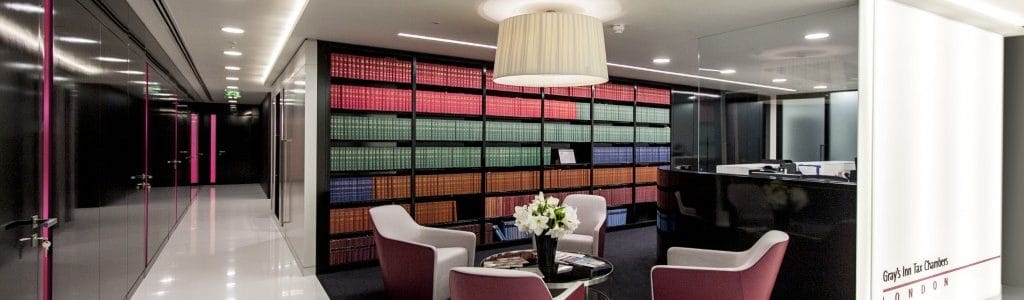
GITC is also one of the few chambers not located within the Inns of Court. That may cost it some of the collegiate feel, but it also gives the set a “modern building in the heart of the city,” and a “very fancy” one on the inside, where each member has their own large office. The technology and IT support are well rated, and cloud software lets members work from anywhere.
Gray’s Inn Tax Chambers offers between one and three pupillages a year. Candidates are assessed on academic and intellectual ability; advocacy and communication skills; an interest in and understanding of the work chambers does; an ability to work with fellow members, instructing solicitors, accountants and clients; and determination and resilience. A first-class degree is usually required, and law and non-law degrees are considered equally.
Applications are made directly to chambers rather than through the Pupillage Gateway, though they follow the Gateway timeline. Candidates face up to three interviews, the second of which includes a written assessment. A mini-pupillage isn’t required, but GITC encourages prospective applicants to do one if possible.
Successful applicants complete a 12-month non-practising pupillage. Unusually, this means they won’t take on any cases during their second six. The idea is to give pupils the chance to get to grips with tax law, a subject they’re unlikely to have studied before. Much of pupillage, GITC says, is spent in chambers: reading papers, getting to grips with the issues and sitting in on conferences. Pupils are assigned a single supervisor, but the set aims for them to spend time with most, if not all, tenants, so they’re exposed to every area of its work.
Topping off the package is an eye-watering £100,000 pupillage award, the joint highest at the bar. It’s worth noting that, unlike at many leading commercial sets, there are no second-six earnings on top of this. Even so, an award that size is an attractive prospect for any aspiring tax barrister.