
The Legal Cheek View
Radcliffe Chambers is a leading chancery set in the heart of Lincoln’s Inn, and a busy one. Its 72 barristers, 12 of them KCs, work across both traditional and commercial chancery, popping up in high-profile cases right across the chancery spectrum. The set takes on up to three pupils a year, each on a generous award of £80,000.
Chambers in its current form is the product of two decades of steady growth. It was born around 20 years ago from the merger of 11 Old Square and 11 New Square, and bulked up again some 15 years ago when a team of commercial and insolvency barristers arrived from 11 Stone Buildings.
So what draws aspiring barristers here? One tenant says: “I was initially attracted to Radcliffe by the prospect of high-quality work from across the Chancery spectrum: from pensions to insolvency, from offshore and onshore trusts, traditional property and probate matters, to financial regulation, professional negligence, and tax. Radcliffe has delivered exactly that, in spades.” And the variety really is there. On the traditional chancery side, work ranges from advising on wills to real estate litigation, while commercial chancery takes in everything from banking and financial services to insolvency and restructuring. As one tenant puts it, “from ancient charities to modern pension funds, we work at the cutting edge of the law.” Tenants might find themselves acting for individuals, companies, local authorities or regulators, and appearing before courts at every level.
“I am incredibly lucky to have such an interesting job,” one insider tells us. “Every day brings something new, whether it is the life story of someone born over 100 years ago, a technical point of law, or a tactical decision to make in settlement discussions.” Another adds that “complex legal problems, oral advocacy and the challenge of finding practical solutions never fail to stimulate.” And the set is growing. Alongside its push into commercial work, there is a swelling pipeline of international instructions, especially in the major offshore jurisdictions such as the Cayman Islands and Singapore. As one tenant puts it, “there is a real sense that chambers is buzzing with work, and growing fast but with confidence. The number of KCs is expanding rapidly, which means more opportunities ‘in house’ for the juniors to do led work.” In short, it is an exciting time to be at Radcliffe.
The past year or so has thrown up a string of high-profile and frankly fascinating cases. Chancery buffs will know Hirachand v Hirachand, the landmark Supreme Court decision on success fees under the Inheritance Act, which Radcliffe’s Sophia Rogers worked on from trial all the way up to the Supreme Court. On the commercial side, Zachary Kell was junior counsel in Upham v HSBC, a nine-week Commercial Court battle over a £1.3 billion claim about an alleged fraudulent finance scheme, a case dubbed a “Hollywood blockbuster.” He is also lined up for the claimant liquidators in Harrington & Charles Trading Company v Mehta, a 12-week trial concerning an alleged multi-layered money-laundering fraud worth north of $1.2 billion.
The set has also been in the thick of litigation flowing from some of the biggest corporate collapses of recent years. David Mohyuddin KC acts for the Secretary of State for Business and Trade in high-profile directors’ disqualification proceedings tied to the collapse of Greensill Capital. Tom Beasley and James Fagan came out on top in the Court of Appeal in Singh v Bains, a shareholder dispute in which the appellant claimed an oral agreement entitled him to half the company, only for the court to reaffirm just how hard it is to dislodge a trial judge’s findings of fact. Stuart Benzie, meanwhile, has been busy in unfair prejudice territory, acting for the successful petitioner in Chave v Farnsworth, a five-day trial sparked by a business relationship that broke down amid scandalous allegations of fraud and criminality.
Back in the UK’s highest court, Caroline Bolton and Natalie Pratt successfully saw off a Supreme Court appeal that confirmed ‘newcomer injunctions’ as a valid form of injunction. And further afield, in the Court of Appeal of Gibraltar, Stuart Benzie notched up another win in a family shares and trust dispute, all under the Mediterranean sun. From inheritance scraps and offshore trusts to collapsed finance houses, shareholder fallouts and billion-dollar fraud claims, Radcliffe’s recent caseload is a neat reminder that chancery work is anything but dusty.
With all that on, do Radcliffe’s tenants ever get to switch off? “When things are busy it can be pretty 24/7,” we are told, “but there’s always downtime to be enjoyed during quieter periods.” Each afternoon, members try to gather for a cup of tea, a daily ritual that sums up the spirit of this convivial set. Pupils are encouraged to join, making it an easy way to mingle, make connections and pick up advice. “Chambers has always been a very sociable place, with morning coffee, afternoon tea and evening drinks all regular fixtures,” says one tenant. Add in a “fancy Christmas dinner” and a “vigorous programme of business development events with solicitors,” often hosted on the New Square roof terrace, and there is plenty to keep the diary full.
Little wonder, then, that members rate the support on offer highly, with peers “always willing to discuss interesting cases, over WhatsApp, in person, or over tea or coffee.” As another puts it, “they’re a (mostly) great group of people: open, frank and helpful.”
Chambers also “encourages members to prioritise their work life balance,” we hear. One junior reckons that “compared to friends in other chambers, I think I have an excellent work life balance. I work hard, but (with very rare exceptions) I get time off every evening and weekend.” Support is never far away, either. “We are a team and work to establish a collegiate and supportive ethos,” one source says, while another adds: “I know that if I am struggling with something or have a question, there will be multiple members who are ready and willing to help work through a problem with me.” The clerks, for their part, run “regular practice management meetings in which members can talk about how their recent practice has been going and what they would like to do going forward.”
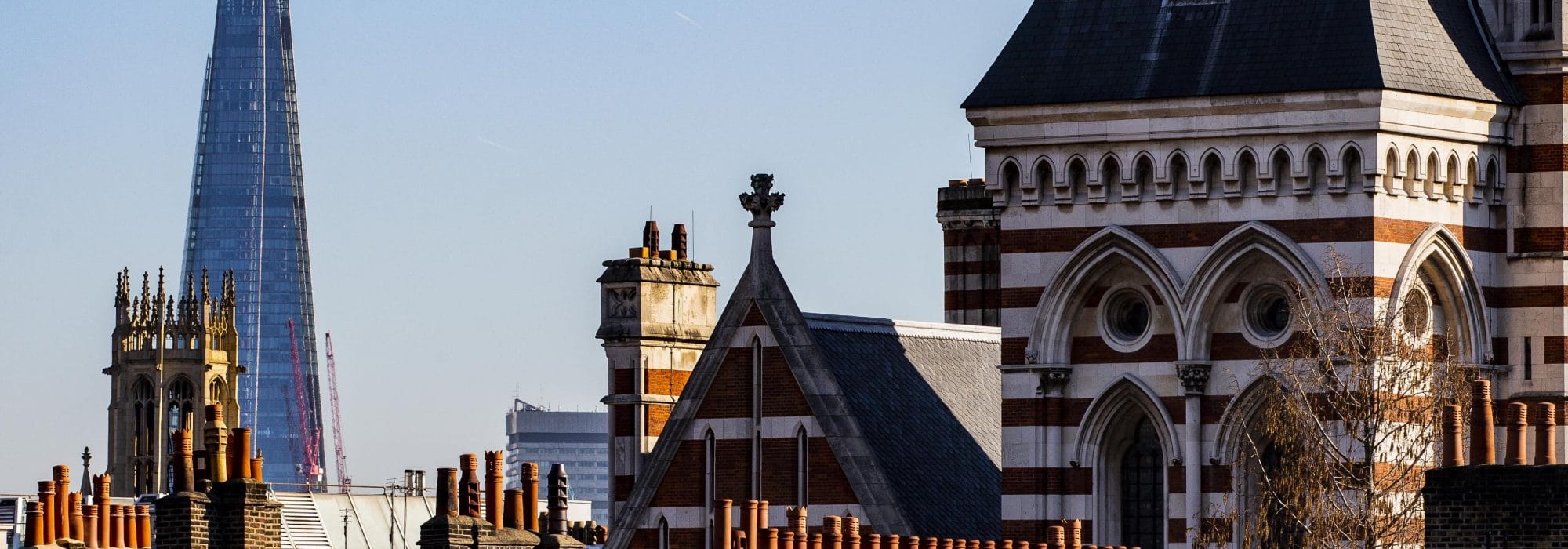
On to the bricks and mortar. Radcliffe sits right in the heart of Lincoln’s Inn, where “the occasionally Dickensian trappings [are] more than compensated for by the elegance of the surroundings.” The set spreads across three sites: “an elegant main building at 11 New Square with a roof terrace (where the con rooms and client-facing facilities are being renovated), comfortable digs at 11 Old Square with a more modern feel, and an annexe in Stone Buildings.” Yes, there are “a handful of scattered Dickensian basement rooms overflowing with papers and books,” but for the most part the rooms are “modern and sleek,” and clients, we are told, are rather partial to a drink on the rooftop terrace.
And if being the only chambers in the Inn with a rooftop terrace were not enough of a boast, Radcliffe is also one of the only sets with a formal IT accreditation. It shows: insiders rate the support as “excellent” and “quick to respond,” and new printing, telephone and antivirus software have all landed recently, just to sweeten the deal.
Radcliffe takes on up to three pupils a year, each on an award of £80,000. Pupils work through a ten-point business development programme and sit with four different supervisors across the year, giving them a proper look at the full range of work. The training comes highly rated. As one new tenant tells us: “I found the training during pupillage to be highly effective. It evolves throughout the course of pupillage. Looking back, I’ve found that it addressed the different skills you need to succeed as a junior barrister very effectively through the course of the year. You get to grips with the substance first, but different things are rapidly built in which are best learned by watching others work: how to adapt to the expectations of different types of clients, how to develop relationships with solicitors, and, for example, practical techniques to prepare for hearings. This is partly made possible by the fact that supervisors range from KCs to relatively junior tenants. I’ve learned different things from each of them, and was left feeling ready to start practising in my own right.”
So what does the day-to-day look like? Expect to work on applications, draft opinions and skeleton arguments, and tag along with your supervisor to court. “In my first seat I generally turned around a piece of substantive written work every 5-7 days, and the feedback I received during the first three months was thorough, detailed, and comprehensive,” one recently minted tenant recalls. Come the second six, pupils start taking on their own work, which is unusual for a chancery set. Winding-up petitions, property tribunals and junior insolvency work are all common pupil fare. You are not thrown in at the deep end, though: one recent pupil says “the supervisor in the first part of my second six went above and beyond to help me manage my fledgling practice and deal with the unexpected issues that real legal life throws up.” Pupils are also invited to chambers’ marketing events to help them start developing their practice at the Bar. And the support does not stop at tenancy. “Whilst there is no formal follow-up training during tenancy, every member of chambers is always ready and willing to help and answer questions,” says one junior.
For those keen to apply to Radcliffe Chambers, applications should be made through the Pupillage Gateway. Around 30 candidates are invited to a short first-round interview of general questions, before a maximum of 10 go through to a more searching second round, which involves a written opinion prepared in advance and a mock client conference. A few ethical questions are thrown in too, to get a feel for candidates’ instincts.
As for what Radcliffe is after, the wish list runs to five: intellect, commerciality, persuasiveness, credibility and commitment. And crucially, the set is keen to stress that there is no “Radcliffe Chambers type,” and that it welcomes candidates from all backgrounds.