Legal Cheek Careers sits down with Shah Qureshi
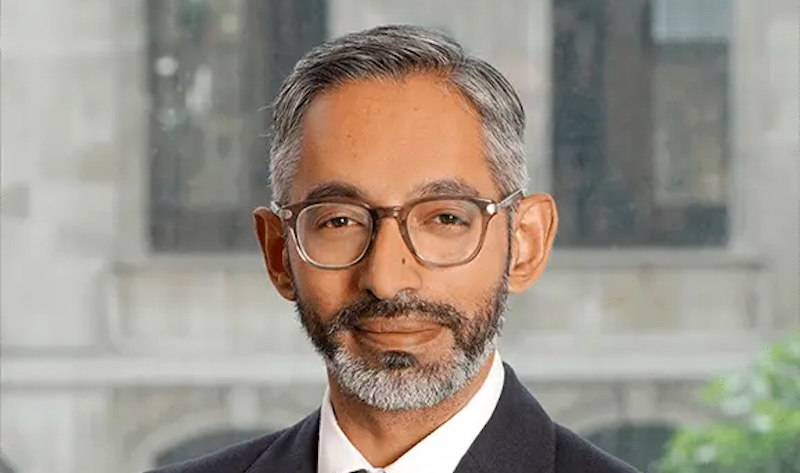
“Above all, Irwin Mitchell is the most down-to-earth firm I have worked at,” says Shah Qureshi, head of the firm’s employment and professional discipline team in London. Since joining, he has helped grow the team from three people into a 13-strong practice advising senior executives and professionals. Speaking to Legal Cheek Careers, Qureshi discusses developing junior talent and navigating an employment law landscape shaped by legislative reforms and the rise of AI.
“During my childhood, law was not really on my radar,” Qureshi recalls. Growing up as a South Asian child in the 1970s and 1980s, he became conscious of discrimination, while films about Gandhi and Nelson Mandela showed him the role lawyers could play in fighting for equality. “I was always drawn to the equality side of the law,” he says. Even so, he found the “black letter law aspect” of his university studies less appealing and initially pursued journalism instead.
While working in journalism, Qureshi also volunteered at Citizens Advice, where helping clients navigate legal problems changed his perspective on the profession. Lawyers, he realised, are “essentially problem solvers as much as they are possessors of black letter law knowledge”. The experience prompted him to complete the Legal Practice Course (LPC) part-time while continuing to work full-time at Citizens Advice.
Qureshi’s interest in employment law grew at Tower Hamlets Law Centre, where he worked as an employment rights adviser and community worker, helping local communities understand their workplace rights. “To me, employment law represents real life for ordinary people, companies, and small businesses alike,” he explains. Alongside handling discrimination and whistleblowing matters, he completed a postgraduate certificate in employment law and trained in employment tribunal advocacy, gaining valuable experience before beginning his training contract at a human rights firm.
Qureshi later spent a decade heading the employment law practice at another London human rights firm before joining Irwin Mitchell, drawn by “the exceptional quality of work across the entire firm”. From corporate and commercial law to family law, clinical negligence and personal injury, the firm’s breadth of expertise and supportive environment offered him what he describes as the “ideal platform” to build a specialist London employment team.
Having worked at several law firms, Qureshi describes Irwin Mitchell as “diverse, collaborative, and national”, with colleagues from different backgrounds working together across its regional offices. He also praises its culture, describing it as an “exceptionally friendly and approachable place to practise”.
The London employment team specialises in guiding senior executives and professionals through what Qureshi describes as “critical, challenging career transitions”. Its clients include lawyers, doctors, dentists and executives in banking and financial services. Reflecting on the team’s progress, Qureshi says it has been “very gratifying” to see colleagues recognised, while the national employment practice has also been shortlisted for Employment Law Team of the Year.
The team has also built a strong record of developing and retaining junior lawyers. “The proof is in the pudding,” says Qureshi. Two trainees have qualified into the group over the past two years, with a third set to follow this November.
At the heart of the team’s training approach is close supervision and early responsibility. “We ensure the primary supervisor is always a partner,” Qureshi explains, with trainees encouraged to see cases “through from start to finish rather than dipping in and out”. Direct client contact is also encouraged, with trainees and paralegals taking initial enquiries through the team’s specialist enquiry line, developing “essential skills in client communication, empathy, and emotional intelligence”. Under partner guidance, trainees also draft correspondence, tribunal pleadings and witness statements.
The support doesn’t stop at qualification. Newly qualified solicitors in Qureshi’s team typically spend their first three to six months working alongside partners on complex cases rather than managing their own caseloads, allowing them to “build skill and confidence”. As they progress, designated supervisors and mentors remain available, alongside regular national employment law training, London sessions with guest barristers and what Qureshi describes as a “genuine open-door policy across all partners”.
The work itself is changing, too. “Significant legislative reforms are currently taking place under the Employment Rights Act, which will dramatically impact our clients,” Qureshi explains. These include the extension of the time limit for most employment tribunal claims from three to six months, which took effect in October under the Employment Rights Act 2025 for relevant claims arising from that date. Further changes coming in January 2027 will reduce the qualifying period for ordinary unfair dismissal protection from two years to six months and remove the cap on compensatory awards.
Qureshi notes that some employers are already bringing forward redundancies and dismissals ahead of the new unfair dismissal protections. For senior executives, meanwhile, removing the compensation cap could make unfair dismissal claims “far more potent”, particularly where remuneration includes substantial bonuses, long-term incentive plans and equity awards. Currently, the cap can make pursuing such claims less commercially viable for higher earners.
Alongside legislative reform, artificial intelligence is also changing how lawyers work. “As a firm, we embrace AI through tools like Microsoft Copilot and Lexis+,” Qureshi says, highlighting their usefulness for research and synthesising information. But he stresses that “substantive legal analysis cannot be delegated”, with trainees and junior lawyers expected to “verify every primary source and read cited judgments directly to ensure accuracy”.
That caution is not without reason. Qureshi recalls an internal test in which AI was asked to summarise a client’s statement, only to invent the name of someone who did not exist. Clients’ use of AI can also create difficulties. “We receive lengthy, repetitive, 30-page documents that are disorganised or unintelligible,” he explains, with the time spent reviewing them potentially increasing legal costs. Instead, Qureshi advises clients to use AI for organisational tasks, such as arranging dates into a timeline, rather than assessing the merits of a case.
For aspiring solicitors hoping to join the practice, Qureshi places particular emphasis on personal qualities. “First and foremost is a genuine interest in our practice area and the clients we represent,” he says. Equally important is understanding a client’s underlying commercial or personal objectives, which requires “emotional intelligence, empathy, and active listening”. He also stresses the importance of resilience, encouraging junior lawyers to take responsibility for mistakes and treat them as opportunities to learn.
To develop these qualities, Qureshi recommends gaining practical experience. “I strongly encourage undertaking pro bono or voluntary work at Citizens Advice, local law centres, or community clinics,” he says, highlighting the opportunities to develop client-facing and problem-solving skills. He also encourages aspiring solicitors to stay informed about legal and commercial developments by reading publications such as Legal Cheek, following the wider news and listening to podcasts.
“I cannot overstate the importance of finding a mentor,” says Qureshi, whose own training principal was Sadiq Khan, now Mayor of London. “I was his second trainee as a solicitor, and we remain in touch for career guidance to this day,” he recalls. But a mentor needn’t be a public figure, or even a lawyer. What matters is having someone experienced to offer guidance and perspective as your career develops.
Shah Qureshi will speaking at ‘The Big Commercial Awareness Themes of 2026-27 — with Irwin Mitchell and other leading law firms’, a virtual student event taking place Friday 6 November. Secure your place now.
About Legal Cheek Careers posts.