
The Legal Cheek View
Meet Vinson & Elkins at Legal Cheek’s biggest Virtual Law Fair of the autumn on Tuesday 6 October 2026.
Autonomy, responsibility, long hours and a lucrative pay package: Vinson & Elkins (V&E) offers the quintessential American-in-London firm experience for ambitious future lawyers hoping to snag one of its six annual London training contracts.
Financially, the firm is doing exactly as you might expect: they’re absolutely swimming in it. Revenues jumped 7.8% to a record $1.13 billion (£840 million), while profit per equity partner (PEP) rose 12.3% to $4.51 million (£3.4 million). Growth was driven in part by booming demand for the firm’s data centre and power work, alongside a busy year for its litigation practice.
The firm’s origins go back to 1917, when V&E was founded in Houston, Texas. More than half a century later, the London office was established in 1971 to service clients involved in the North Sea oil boom, and the City hub retains a strong focus on the energy sector to this day. There are roughly 60 lawyers in London, 16 of whom are partners, though most of the firm’s lawyers remain based across its nine US offices. Alongside London, the firm’s international outposts include Dubai, Dublin and Tokyo, while a recently opened Brussels office marks the latest chapter in the firm’s global expansion.
The London office is also far more than just an outpost servicing UK clients. It acts as a coordinating hub for much of the firm’s international work, with lawyers advising on disputes, transactions and projects spanning Africa, the Middle East, Central Asia and Latin America. The team is particularly well known for its work across the energy, infrastructure and telecommunications sectors and, more recently, has been part of the firm’s booming data centre and power practice, one of the key drivers behind V&E’s record financial performance. Clients range from major corporates and private equity investors to financial institutions, meaning trainees can find themselves working on matters that span multiple jurisdictions and industries at once.
There aren’t yet any international secondment offers to these destinations, but at V&E there’s not much need for them, as our sources report trainees being “sent across the world SOLO to meet with clients.” And in terms of the work you get to experience here, that’s just the tip of the iceberg. As one source enthuses: “One of the things that becomes obvious soon after you start working at the firm is that everything the firm works on really is complex, high-value, top-of-the-market stuff. The work is incredibly stimulating, and you get the chance to try your hand at things which are above your pay grade early on. You don’t really notice the time ticking by.” There is obviously still the typical trainee tasks to contend with, as one recruit puts it: “Crap flows downhill and it’s no surprise who’s at the bottom. But the majority of the work is way above trainee level so it’s a small price to pay.” Another rookie adds: “Seniors will always try and get you involved with things above your pay grade, which really helps you develop. The more you can prove yourself and establish trust, the more of these opportunities come your way.”
In line with most American firms with small intakes, trainees are given little structured training. One rookie explains: “Training is done informally, and therefore is much more targeted at the work V&E does and the cases and matters you are staffed on at any one time. Because of the informality of the system, it is easy and expected that you ask questions of partners and more senior lawyers as you progress through a seat.”
That said, every trainee is assigned a mentor “who you can speak with daily and learn from”, as well as some formal training sessions hosted by associates, senior associates, counsel and partners in the office. Though the lack of structured training may seem daunting, trainees are well supported as they gain hands-on experience. One trainee tells Legal Cheek: “I have been constantly given work above my experience level which really stretches me as a lawyer, while still being entirely supported throughout. V&E is excellent for recognising potential and then encouraging it in a nurturing way.” Trainees highlight the non-rotational structure of the training contract, where, rather than the traditional seat rotation, trainees gain experience across different departments simultaneously. This offers newcomers more flexibility and “allows a trainee to gain knowledge and experience that would not be possible within one six-month period.”
A smaller intake also makes for close-knit cohorts. One rookie told Legal Cheek: “Due to the smaller trainee class size, the trainees are all very good friends and there is slightly less competitiveness than you might see at other firms.” Another offered this assessment: “There is almost no competitiveness at V&E (I say almost just in case someone is great at hiding it). Trainees are quick to support each other and there are no sharp elbows. Recently, a corporate trainee bailed me out when it was looking like I’d have to pull an all-nighter. I didn’t ask; he just offered.” This support extends beyond trainees right up to partner level, with one source reflecting: “Lots of law firms talk about open door culture, but at V&E it really isn’t lip service. There’s not a single person in the office, regardless of seniority, who I wouldn’t feel comfortable approaching. As trainees, we are encouraged to speak to partners and build relationships within the firm.” It is therefore not uncommon for partners to delegate directly to trainees and offer feedback and training, and associates, senior associates and partners are all regulars at firm socials.
Trainees also share their office with a mentor from the firm’s associate ranks, who are “always keen to help you learn so you develop and become more of an asset to the firm.” One source summarised their experience with members at the top of V&E: “Partners are keen to teach you and help you develop as a lawyer, and always make time for any questions or concerns you may have. Everyone is very approachable and you are encouraged to knock on doors or pick up the phone if you need something.”
Of course, high levels of responsibility and remuneration normally mean plenty of late nights in the office. “A lot of the transactional work involves working with the US, so often your day can only just get going at 5pm,” one source explains. The upside is that mornings tend to be quieter, giving trainees time to get to the gym or run errands before things pick up. Insiders add that “people are generally conscious of your personal life and time off”, but weekend and evening work can sometimes be sprung on you depending on your seat and the stage of a matter. As one puts it: “The expectation as a trainee at the firm is for you to be available and responsive at almost all hours, including weekends and late nights. This is dependent on the individual delegating the work, of course. It can be difficult to manage a balance, and especially during busier periods, you can feel a pinch point where two matters are busy at once with conflicting demands.”
Another offered this more balanced perspective: “I make time for the gym and seeing friends. It’s rare I have to cancel plans, but if I do have to work at the weekend, the associate or partner will also be doing it. Everyone’s in it together, and there’s no ‘we’ll give it to the trainee and enjoy ourselves’ mentality.”
The social life, meanwhile, is “fairly good.” Rookies report informal socials such as weekly pub trips and in-office drinks, as well as more formal events like an end-of-summer social, a Christmas party and a ski trip aptly named “V&Ski.” “We also do regular charity social events like cycling to Brighton as a team or competing in the Law Society rugby, netball and football tournament in September,” adds another insider.
The firm’s rookies note that its legal tech is “pretty average but nothing to complain about”, with new laptops arriving imminently to replace the old ones, which are “struggling on bravely.” With a four-days-in-the-office policy in place, trainees working from home are set up with a monitor, docking station, keyboard, mouse and webcam, though most prefer coming into the office anyway.
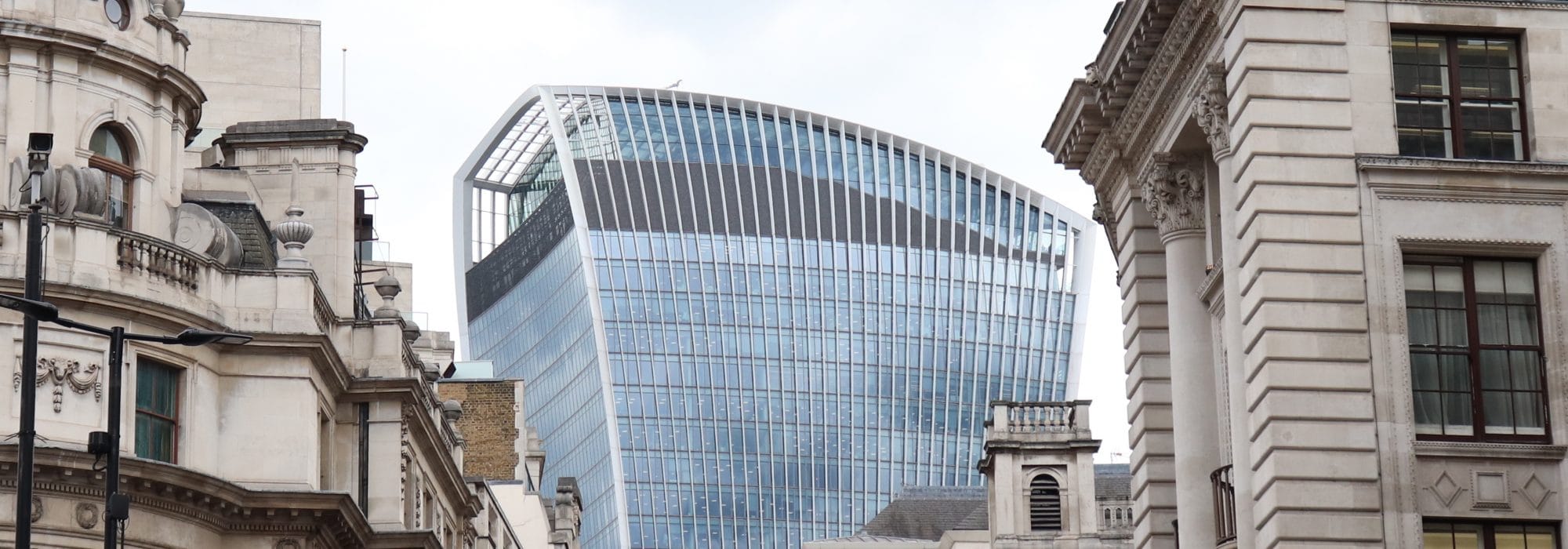
That’s hardly surprising given that they are working from “very fancy digs in the Walkie Talkie with Warhol prints on the walls and lots of white marble.” V&E’s office sits on the 24th floor and boasts panoramic views of some of London’s most iconic sights, including St Paul’s, Tower Bridge and the Shard. “It’s got that wow factor. Easily the best office I’ve seen,” commented one insider. The office is also just a few floors below the Sky Garden, where V&E’s London lawyers enjoy discounted food and drinks.
The one downside is the lack of any canteen. “Some stale digestive biscuits are in a jar on the side if you find yourself about to keel over (not even the chocolatey kind!),” laments one hungry rookie. And hunger-induced frustrations are reportedly not helped by what one trainee described as a “dystopian” move: a lock on the snack cupboard until 7pm.
Still, the broader perks should more than compensate. One trainee lists travel, health and dental insurance, a mobile phone stipend and a gym stipend among the benefits on offer. Oh, and a salary of over £173,000 isn’t bad either.