
The Legal Cheek View
Meet Burges Salmon at Legal Cheek’s first Virtual Law Fair of the autumn on Wednesday 2 September 2026.
Corporate law firms often struggle to differentiate themselves, but Burges Salmon genuinely stands out from the crowd with a model that sees it do a large amount of City of London work mostly from Bristol. Pair that with a renowned reputation for niceness, some environmentally friendly honey-bees and a fancy dress charity canoe challenge, and you’re onto a winner according to Legal Cheek insiders.
Burges Salmon is firmly in the ascension when it comes to its financials. Firmwide revenues sit at around £178 million, according to the latest publicly available numbers, while profit per equity partner (PEP) is understood to be close to £700,000. There’s been some change at the top, with clean energy expert Ross Fairley now settled in as senior partner and some new faces having taken over various departments including projects and employment. But it’s otherwise business as usual: the firm’s latest promotion round saw a record number of 20 taking on a director role across Bristol, London and Edinburgh.
Trainees receive “a very diverse range of work” with “a real emphasis on the key sector approach,” one insider reports. As another rookie details: “The work is a real mixture. I have been involved in drafting applications and letters to the court and attending interesting client calls, but also document review will never be stimulating…” Trainees in larger departments tend to get more of the typical trainee tasks like proof-reading and note taking, with the corporate team singled out as particularly “restrictive and trainee-typical,” but we’re assured that “more senior colleagues and solicitors are always keen to get trainees involved in interesting projects or tasks and try to find ways to bring them into the fold.” The competition team received particularly high praise from one trainee who relished “the opportunity to lead on CMA submissions, drafting of advice, economic data analysis, and more,” describing the work as “limited only by how far I wished to go as a trainee.”
Luckily, the firm’s impressive clientele list makes up for these slightly less stimulating tasks. The corporate and M&A team have recently advised the drone-enabled data intelligence company StirlingX on its $20 million series A investment, while those in planning have been supporting the financing for Twyn Hywel Energy park, one of the first commercial-scale onshore wind projects in Wales. Over in energy and utilities, trainees have had the opportunity to support TfL on a new agreement to generate and deliver green solar power for the tube, and the firm is also a major player in the Horizon IT inquiry.
Trainees have reported “excellent,” albeit not particularly numerous, client secondments to big name companies including BP and EDF Energy, as well as organisations including the National Crime Agency, are also becoming more common.
The six-seat (rather than the typical four) trainee rotation model is highly regarded, with the training, consistently top-rated in the Legal Cheek Trainee and Junior Lawyer Survey, described as “second to none” thanks to “regular training sessions specific to the department you are in as well as a generally good level of support from supervisors.” In three adjectives, the training is “consistent, well planned and practical,” though this can be seat-dependent. High levels of responsibility are a prominent theme, with supervisors said to be “keen to get trainees involved in substantive work and ensure we get a varied and broad experience” and “generally happy to answer any questions.” Target chargeable hours are also left relatively low for trainees, allowing them to invest time in their development.
One current rookie tells Legal Cheek that the firm is also trialling a new training structure following the transition to SQE, and certain departments are levelling up their game, with the projects team implementing a “banking-esque training programme for trainees.” In other seats, there’s more of a “pick it up as you go” approach, but this isn’t necessarily a bad thing, as another trainee quips “lawyers don’t necessarily make the best teachers so I wouldn’t necessarily say that I knew more in the departments with training programmes.”
The trainee cohort itself is said to be “one big team pulling in the same direction,” with this rookie confirming that they are “yet to meet an a***hole in 2.5 years.” “Trainees all get along like a house on fire and there’s always a group to join at lunch. We’re all very supportive of each other, and keen to share information and get thoughts from different departments on what everyone’s up to,” summarised one new recruit. Another junior tells us: “The firm’s culture is amazing. Everyone in the firm is really supportive and that permeates throughout the firm. I look forward to coming into the office every day.” After pulling through the SQE together, insiders say they now “feel that we can be really open with each other,” and the current cohort recently enjoyed a weekend together at a lovely manor in Devon.
Sources across the board praise the firm’s openness and how senior members actively spur on trainees. “Lawyers at Burges Salmon are truly a great bunch. I’m consistently encouraged to take on more challenging work, invited along to important internal and external meetings and never feel scared to put my hand up when I’m lost or have made a mistake.” The “incredibly busy” partners are understandably somewhat less accessible, but one trainee north of the Border assured us “there isn’t a partner in the Edinburgh office that I wouldn’t feel comfortable approaching.” Trainees also praise the open-door policy, informing us that they’re “actively encouraged to go to colleagues in person and chat about work when in the office instead of exchanging emails.”
When not in the office, there’s lots to get involved in, “from volunteer days and sports events to Christmas parties and a trainee weekend away.” One insider revealed that “the social life has been exceptional in every seat I’ve had,” likely thanks to the “BSocial committee which organises social events, for example theatre trips, games nights and pottery painting.” If those activities aren’t enough for you, we’ve heard reports that “support and budget is provided if you want to run your own event or start a new club.” Trainees also raved about the annual summer and Christmas parties, which the firm puts “real effort” into. Burges Salmon is also very big on its charity events. Those in the Bristol office have raised £32,000 for local youth support organisation Young Bristol by taking part in a gruelling 25-hour continuous canoe relay (in fancy dress) along the River Avon and Bristol Docks. Pizza lunches, rounders tournaments, football, hockey, running and board-game clubs, and regular after work drinks make up the rest of the activities on offer at this friendly firm.
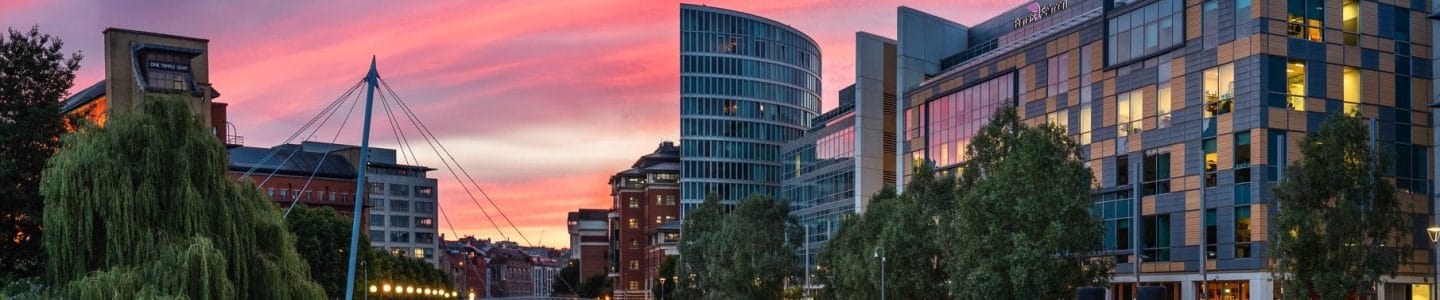
To add to the utopian vibe, Burges Salmon’s office spaces are said to be “outstanding.” London and Edinburgh always received high praise in the Legal Cheek Trainee and Junior Lawyer Survey, but following a recent refurbishment, it seems the HQ in Bristol is now also up to scratch, with one insider telling us, “the new open plan office floors are incredible with live plants, various meeting pods, full suite of standing desks, break out rooms… the works.” The only drawback is that rookies now have less space to “hoard as much stuff in the office.”
The absolute highlight of the Bristol office, however, is said to be an “elite” glassworks canteen (equipped with a coffee bar, of course) which is apparently better than many top restaurants, and cheaper too. “Bakery-quality cakes for £1.30, who could say no?” an insider reports. The “delicious salad bar, good food, and plenty of tasty pastries, sweet treats and snacks” has left trainees very satisfied with their daily dining experience, and there’s even breakfast on offer for any early-birds, “with cooked options as well as a yoghurt bar to choose from.” A weekly “cake trolley” coupled with “fantastic stroop waffles” augments the culinary experience. Even the firm coffee is said to be “excellent” (single use cups have been dropped in a bid to “be more eco-friendly”). “I don’t even cook any more, the catering is so good,” another satisfied trainee adds. On top of all that, the hub also contains a “healthy stock of cards for special occasions and essentials like antihistamines” for those forgetful rookies dashing out for last minute birthday plans. Any City rookies wanting a taste can take business class train trips to and from Bristol, yes, even trainees.
Many of these much-loved pastries are even offered as freebies (free doughnuts on a Thursday and free cakes on a Friday, for example) for trainees making the commute at the back end of the week. Not that this is expected of you, as Burges operates a “great WFH policy” which allows new recruits to work from their office beds two days a week. To cater for this, lawyers are provided “surface books, mobile phones, additional screens, risers, desk chairs, remote keyboard and mouse,” plus any extras your heart might desire.
On the tech front, juniors are said to be using “AI more and more,” with an opportunity to do a seat in legal tech and a new digital enablement programme designed to leverage GenAI, together with internal expertise, to enhance the firm’s client offering. The firm has now rolled out its partnership with AI automation company Wexler firm-wide, adding to the existing frontline offering, which includes Microsoft Co-pilot and the “helpful” Harvey. One Burges trainee, however, would be keen to see more from the firm on this front, commenting that “the firm seems to take a conservative approach to tech and let other firms be the guinea pigs before committing to new tools.”
Some tensions arise in relation to work/life balance, with the firm to a certain extent becoming a victim of its own success. “Hours are creeping up across all teams, which leads to feelings that the firm is walking a fine line between London hours on a Bristol salary,” one source informs us. Another adds that “in the past year or so, work-life balance has become less favourable (although it is still good),” citing “the firm’s push to expand in its current 5-year strategy” as the cause of some late nights. One insider had this to say: “Work-life balance varies between departments, but late work can be expected at short notice due to a lack of communication at times, which can make it hard to plan activities around work. The hours aren’t like Magic Circle, but can be close on exceptional weeks.”
Some have had a more positive experience: “There is no pressure to stay on at work once you have submitted your work for the day. If early evening comes and you’ve completed what you need to that day, then there’s no expectation or requirement to stay at your desk,” said one. “Generally excellent, but there are obviously busy periods in which it is non-existent,” another explains. Transactional seats are said to involve “longer days but few extremes,” while in contentious areas sources tell us “you can end up working a long day on short or no notice.” Hours in advisory seats “tend to be very similar day-to-day unless something exceptional comes up,” so this is the safest bet for those looking for something in the goldilocks zone.
Another source had this to say on the work-life balance on offer at Burges Salmon: “On the whole good, but it does ebb and flow. The occasional midnight finish is to be expected, but this is not a regular occurrence. I was in the office at 8pm the other week and a partner came in to check I was okay (and sent me home!).” In summary, “there will always be late nights, but the hours in general are reasonable, especially given the salary,” according to one level-headed rookie. Trainee rates currently sit at £49,500, increasing to £51,500 in the second year of the training contract and £76,000 at NQ level.
Aside from offering the highest market pay outside of London, perks include a standard package of private healthcare, a cycle to work scheme and free bike maintenance, two volunteering days a year, discounted tickets to local exhibits and events, season ticket loans, and the opportunity to take development courses such as language lessons in French, German, Italian, Spanish and Mandarin.
The firm is pushing to cut its emissions by 50% by 2030, and a BSustainable committee has been established to promote Green Week and other environmentally conscious events throughout the firm. The Bristol office also plays host to a colony of bees supported by a local business, and last year’s inaugural honey harvest yielded 100 jars of the golden stuff.