

Harry Chester, Bristol law student, discusses how Iran is ripping up contracts
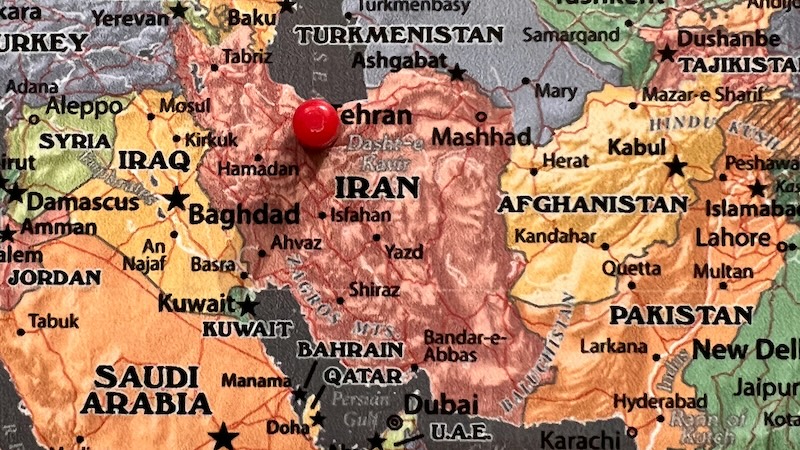
President Trump’s and Netanyahu’s joint strike on Iran has led to a new era in geopolitics that has created shockwaves in the commercial world. The US-Iran memorandum of Understanding is now “over” as of early July, and America has returned yet again to the conflict as of 21 July.
This journal looks past the geopolitics, focusing on how the crisis is playing out for commercial lawyers and the businesses they advise. Here, the more immediate story has unfolded in making UK companies that trade with counterparties exposed to the Gulf contend with a sanctions regime that can change within days, and volatile shipping routes that open and close dependant on negotiations. For UK lawyers, this crisis is an active test of how well-drafted or poorly drafted contracts can withstand or break under geopolitical stress, forming a new era of litigation that firms should expect to advise on as the crisis unfolds.
The sanctions rollercoaster
On the 22 June, the US Department of Foreign Assets Control (OFAC) published a new general licence (GL X). This provides broad authorisation for parties to purchase and resell Iranian crude oil, petrochemical, and petroleum products. However, this was revoked on the 7th of July after Iranian attacks on tankers in the Strait of Hormuz and was superseded by GL X1. This new licence gave only a 10-day-wind-down that “only allows transactions that are ‘ordinarily incident and necessary’ to the transactions previously authorised by GL X”. This has now expired as of the July 17, and all blocked payments are now required to go into a US-based blocked account. Twelve days later, new sanctions were unleashed as OFAC designated 10 entities and 8 vessels tied to Iran’s alleged monetisation of the Strait of Hormuz.
This is an ongoing case study in why compliance teams can no longer treat sanctions clearance as a one-off check. Commercial contracts need to be updated with a sort of continuous monitoring built in, incorporating sanctions review clauses or perhaps even new rights regarding suspension if the geopolitical situation changes in either way. Contract law is under strain, and so it is time to adapt.
Want to write for the Legal Cheek Journal?
Find out moreContract law under strain
In English contract law, an unexpected event that makes performance impossible can render a contract “frustrated”, a principle set out in National Carriers v Panalpina (Northern) Ltd. The bar is high, and such cases remain rare; rising costs alone, such as rerouting away from the Strait, are unlikely to excuse a breach without clear contractual wording. Common law also has no automatic “force majeure” concept, parties must write it into their agreements, and even then, protection is being tested. The key question is whether a clause’s wording covers the disruption directly, or whether catch-all language referring to events “beyond the reasonable control” of a party is broad enough to capture it. If performance is merely impaired rather than prevented, force majeure typically will not apply, and parties must instead consider whether the contract can be performed another way.
This tension has also surfaced between shipowners and charterers over what constitutes a “safe” course of action in the Strait of Hormuz. Standard charterparties contain an implied or express safe port warranty under the Eastern City test: a port is unsafe if a vessel cannot reach, use, and leave it without exposure to a danger that good navigation and seamanship cannot avoid, absent some abnormal occurrence. Shipowners argue that GL X1’s abrupt revocation makes loading oil at Iranian ports legally “unsafe” due to risk of vessel asset forfeiture and OFAC blacklisting. Charterers counter that the mere threat of sanctions or regional conflict does not meet English law’s high threshold for objective unsafety; absent active bombardment or a blockade, a port remains contractually safe and loading orders should stand.
The case putting benchmarks on trial
A crystallised dispute is now playing out in the High Court, where global commodities trader Mercuria Energy Trading has sued the Baltic Exchange over TD3C, the benchmark tracking VLCC freight rates for crude shipped from the Gulf to China. Mercuria argues that with the Strait of Hormuz closed, TD3C no longer reliably reflects the market it measures, forming a breach of duty by Baltic Exchange in failing to suspend it. This claim is reportedly worth hundreds of millions of dollars in losses on physical freight contracts and derivatives fixed to the index. Baltic Exchange denies this, maintaining its benchmark, methodology and governance have remained robust. The case has been fast-tracked for a 15-day trial by Mr Justice Christopher Butcher, citing the “wider market concern” at stake given the billions of dollars in freight contracts and financial instruments linked to the index. The expedited hearing is now listed for the 26 October. The stakes extend beyond the two parties: a Mercuria win puts benchmark administrators on notice that they can be held liable for failing to suspend an index during geopolitical crises, while a Baltic Exchange win would confirm that the benchmark stays legally binding even as it diverges from economic reality. This case will decide whether index-linked contracts remain a viable pricing tool in a crisis, or whether that volatility becomes a cost market participants simply have to incorporate.
Want to write for the Legal Cheek Journal?
Find out moreMitigation measures taken by UK professionals
London remains the global nerve centre for maritime law, commodities trading and marine insurance, and UK professionals are effectively rewriting the rules of engagement in real time. Lloyd’s Joint War Committee has expanded its high-risk designations, meaning the cover many vessels sailed with no longer applies, while brokers wait on reinsurance to catch up. Shipping arbitration filings in London have hit a decade-high, and firms like HFW, which is currently defending Baltic Exchange against Mercuria, are auditing clients’ derivatives and freight agreements for fallback pricing indices ahead of October’s ruling. Since standard client background checks cannot catch shell companies or Iran’s 400-plus “shadow fleet” vessels, firms are turning to legal tech platforms like Legl to screen the International Maritime Organisation’s tracking numbers and ownership registries against real-time OFAC data.
Lawyers also seem to be moving away from rigid sanctions clauses toward “bespoke” conditional performance terms that trigger automatic termination or rerouting if a licence like GL X is abruptly revoked. Meanwhile, businesses are mass-derisking from Middle Eastern logistics networks and navigating the UK’s new controls, under which exporters can face strict liability for diversion to sanctioned regimes even without knowledge of it.
Conclusion
Although the geopolitical crisis is hard to predict, the legal fallout is easier for UK professionals to tackle and adapt to. This is a new era that will test force majeure clauses more stringently, push sanctions-related disputes over toll payments and blacklisted vessels into the courts and put benchmark and index litigation demonstrated in Mercuria on the map for the first time. This is not a temporary crisis response, but a shift in how contracts, insurance and compliance are built for the Gulf region. Sanctions review clauses, conditional performance terms and end-use audits are becoming standard practice rather than exceptions, a live masterclass in how commercial law responds when geopolitical crises threaten the world’s economic balance
Want to write for the Legal Cheek Journal?
Find out moreHarry Chester is a law student at the University of Bristol who aspires to be a future commercial solicitor, with particular interests in the data, IP, and technology sectors of commercial law.