Journalism student and freelancer Evie Wynne explores how children can be shut out of hearings determining their freedom
Physical restraint, motion sensors, restrictors on the windows, child locks in the car, and the unnerving presence of at least two adults (often strangers) monitoring your every move. This is all part of everyday life for a child living under a deprivation of liberty (DoL) order.
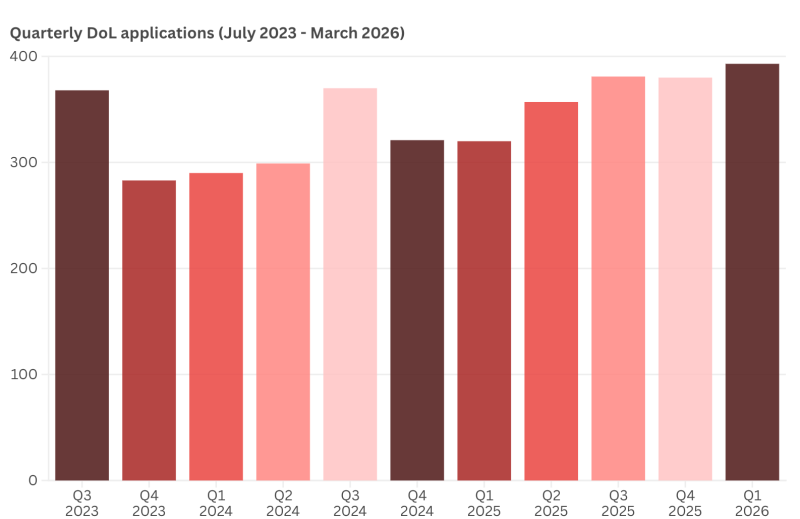
The reasons why a child might be deprived of their liberty in this way are both multiple and complex, but can include crime, sexual exploitation, absconding behaviour, and self-harming. In these select circumstances, DoL orders are intended as an emergency measure to de-escalate at the point of crisis and enable the child to gradually reintegrate into the community. And yet, with 1,440 DoL applications being made in 2025, it appears their use has now become strikingly commonplace.
Want to write for the Legal Cheek Journal?
Find out moreAshley Hallett is a residential children’s home manager in South West England and has worked alongside multiple children subject to highly restrictive DoL orders. He says the young people would be under constant supervision, with up to seven staff present at any one time. Cleaning products and sharp objects — knives, cheese graters, drawing pins, and nail clippers — were locked in a safe, in case the child attempted to harm themselves or others. “Escalations could happen within the blink of an eye,” recalls Ashley.
In most cases, when the need arises for a child to be deprived of their liberty, either for their own safety or the safety of others, the court will do so using the most relevant piece of legislation. For example, depending on their needs, the child may be placed in an adolescent health unit, under the Mental Health Act, or in a secure children’s home, under section 25 of the Children Act. However, in the absence of any suitable statutory framework, the High Court must rely upon its inherent jurisdiction to deprive a child of their liberty.
Crucially, DoL orders are permissive in nature, which means restrictions should only be used where absolutely essential, shrink over time, if possible, and be reviewed on a regular basis. Ashley, for example, remembers spending months working with the children to reduce constraints on their liberty, presenting evidence to the court when a particular limitation was no longer deemed necessary. But this is not the case for every child.
In recent years, media coverage of this issue has included reports of young people being isolated from their family and friends, denied access to their mobile phone, supervised while in the shower, inappropriately restrained, and missing months of schooling.
“I think DoL orders can be a good thing, they can be a bad thing, they can be a misunderstood thing,” says Ashley. “There have been times where we did think: have we done it? Have we hit our limit? But you know every day is a new day.”
Who speaks for the child?
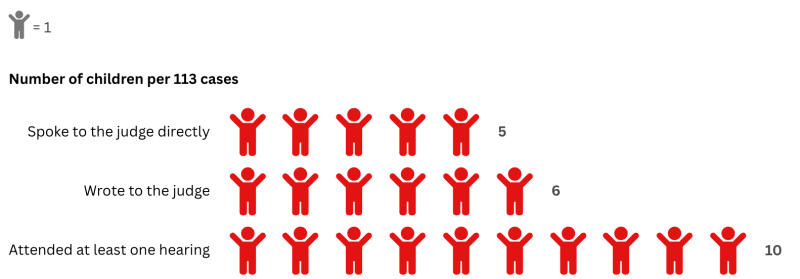
In 2023, a study conducted by the Nuffield Family Justice Observatory (NFJO) found that, out of 113 cases, just 10 children had attended at least one hearing, five had spoken to the judge directly before the hearing, and six had written to the judge to express their thoughts.
Every young person involved in DoL proceedings is appointed a court guardian, whose job it is to listen to their views and incorporate them into the recommendations they make to the judge. A designated social worker should then explain any decisions being made about the child to the child, using language they can understand. In this way, the young person’s own wishes can be properly established and taken into account by the court.
But, for many social care campaigners – and the children themselves – this is not enough.
The Children’s Commissioner’s report on DoL orders, published in November 2024, found that a number of young people did not feel their views had been listened to by the people making decisions about their care. Of the 15 children interviewed, five said their DoL order had not been explained to them until after it had been implemented and four expressed that they would have liked to speak to the judge making the order, but were not given this opportunity.
Want to write for the Legal Cheek Journal?
Find out moreLisa Harker is the NFJO’s founding director and has dedicated much of her working life to improving the lives of children who might otherwise be overlooked. She says: “The whole system isn’t sufficiently focused on making sure that young people have a voice. I really believe having a much stronger connection with and hearing directly from young people challenges your view about whether you’re doing the right thing.”
But it is not just the child who is forced to contend with the consequences of these proceedings. In the same study, the NFJO revealed 88.5 per cent of parents and carers were not legally represented at any hearing in a DoL case.
The fact DoL proceedings are an application under the inherent jurisdiction of the High Court means parents are only eligible for legal representation on a ‘means and merits basis’. Should this threshold be met, a separate, special application must then be made to the court. This differs from care proceedings, where parents are automatically entitled to legal representation.
As a result, family members can be left feeling sidelined in proceedings that will necessarily lead to significant ramifications for both them and their child. Although, many legal professionals are keen to stress that most parents do tend to agree with the local authority’s application and, in the rare cases where they request legal representation, it is usually granted.
What next?
As recently as last year, former president of the Family Division, Sir Andrew McFarlane, published a guide entitled ‘Writing to Children: A Toolkit For Judges’. Drawing on the knowledge and experience of young people who have previously been involved in family court proceedings, legal professionals, academics, social workers, and psychologists, the toolkit encourages judges to write a letter to the child concerned, explaining their decision in clear terms. It was Sir Andrew’s hope that, in publishing the guide, the practice of judges writing to children would “rapidly become the norm”.
Lisa Harker accepts that some judges do take care to ensure children are invited to their own hearings – and yet, she remembers sitting through an entire day of DoL proceedings without seeing a single young person in attendance.
Rebekah Pierre is a registered social worker, care-experienced campaigner, and author. She is also the deputy director of children’s rights charity, Article 39, which has previously spoken out about the issues surrounding DoL orders as part of its ‘End Child Imprisonment’ campaign.
Want to write for the Legal Cheek Journal?
Find out moreRebekah agrees that the court could be doing much more to involve young people in the decisions it makes about them. “There’s an assumption that children can communicate their needs and that’s not always the case,” she says.
Rebekah believes there are several factors that might contribute towards a child being reluctant to participate in their legal proceedings, the most important of these being who they are speaking to and where. She explains: “School or their unregistered accommodation might, in and of itself, be a traumatic environment — they might feel watched or pressured.”
For children to be able to express themselves fully, conversations should take place in an environment where they feel safe and with a professional they trust. This will encourage the young person to share their true thoughts and feelings about the process and, ultimately, result in an outcome that better reflects their needs.
It is inevitable that the decision to deprive a child of their liberty will impact every part of their day-to-day life — why shouldn’t they have a greater say in it?
Evie Wynne is a freelance journalist and postgraduate journalism student at the University of Sheffield