

Which one is it?
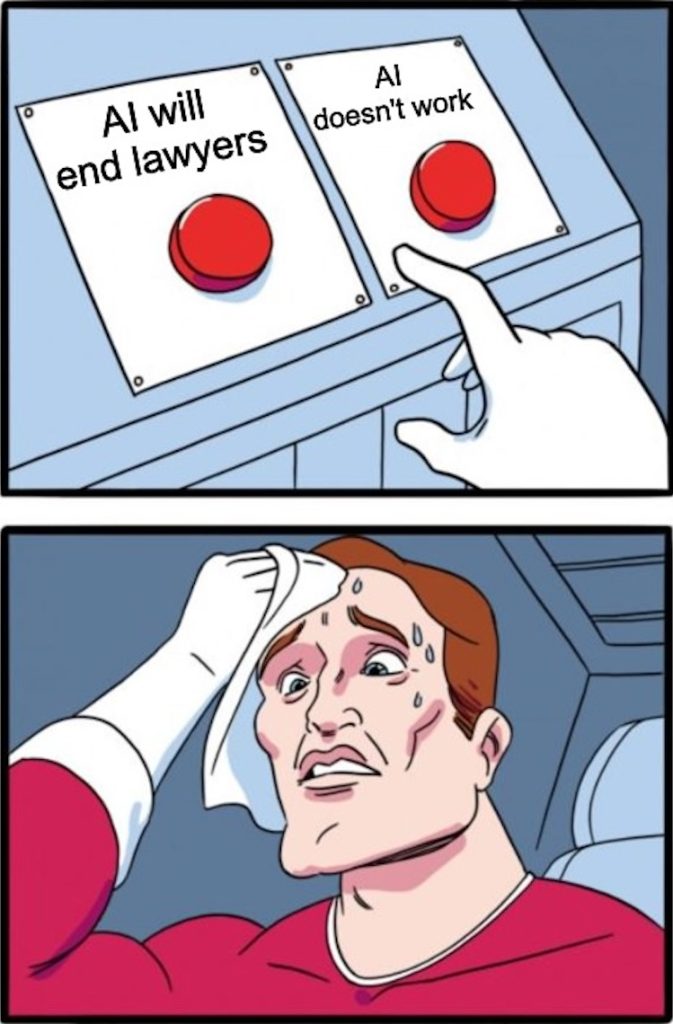
The confusion about whether AI is a total game-changer or a useful but flawed bit of new tech continues — with law once again providing the backdrop for much of the debate.
On one hand you have ‘AI will kill all the lawyers: A barrister’s warning’, published this week in The Spectator. The gist of the piece is that a calm and sensible barrister in his mid 50s, known for his “centrist, clever, moderate, sceptical” nature has come to believe that AI will “completely destroy the law as we know it: wrecking careers, ending systems, making thousands jobless”, with the “Armageddon coming faster than almost anyone realises”.
The basis of this conversion is the (anonymous) barrister’s recent use of Grok’s new premium AI tool, which he describes as “at the level of a truly great KC”. So impressed is he that when his niece reveals to him that she wants to be a lawyer, his response is: “please do not destroy your life. Do not get into a lifetime of debt for a job that won’t exist in ten years. Or less.”
On the other hand, there is the senior partner of global law firm Simmons & Simmons firing a warning about “AI slop”. “While we champion AI,” explains Julian Taylor, “we have emphasised that it will not, and cannot, replace a lawyer’s duty. It is critical to embed rigorous human review to ensure every piece of advice is not merely fast, but defensible, contextual, and free from hallucinations.”
He goes on to cite an MIT study about ‘cognitive debt’, suggesting that an “over-reliance on generative AI may weaken critical thinking, memory retention, and the ability to own a complex argument.” And he concludes: “We aim to gain a competitive edge with our lawyers not by simply using AI the most, but by using it to return time to judgment — preserving and intensifying the high-level strategic thinking that our clients expect from us”.
So which is it?
Reading the reams of anonymous comments we receive as part of Legal Cheek‘s annual survey of over 2,000 trainees and junior lawyers, who tend to be at the coalface of AI adoption, a theme is how hard big law firms find it to integrate shiny and expensive new AI systems into their day-to-day operations. “It would be cool if somebody knew how it worked” one suggests facetiously, echoing a mood of frustration among rookies about the disconnect between many firms’ public pronouncements on AI and the reality of what’s going on in the office. Where the tech is fully operational, the output is often disappointing and frequently contains errors, our insiders tell us.
This may explain why training contract numbers are holding up quite well. Our exclusive research recently showed that graduate hiring among top law firms is down from a 2023-24 peak but remains well above pre-Covid levels. And when we looked into the reason for that fall it was largely explained by the growth in school-leaver solicitor apprenticeships. In short, AI doesn’t yet seem to be a factor in corporate law hiring patterns.
Of course, it’s early days. History tells us that technological change is overestimated in the short term but underestimated in the long term. Innovation also seems to have a capacity for creating new types of work that are hard for anyone to imagine before they emerge. As such, the best advice to those thinking about careers may be to not over-think it. There’s a lot to be said for doing what you enjoy and hoping for the best.