
City lawyer overturns £50k fine for ‘without prejudice’ email

Avatar photo

By Legal Cheek on

11

Osborne Clarke partner in High Court success
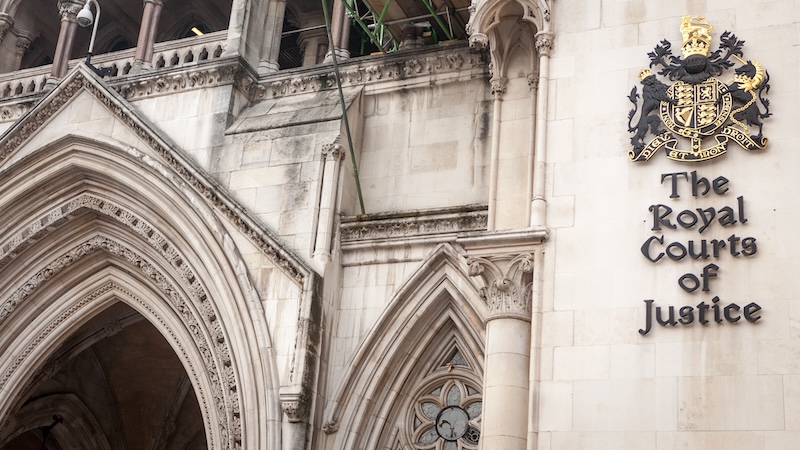
Royal Courts of Justice
A senior City lawyer who was fined £50,000 after a disciplinary tribunal found he had breached regulatory rules by sending a “without prejudice” email to a former Magic Circle partner turned tax blogger has successfully overturned the decision in court.

Ashley Hurst, a partner and head of client strategy at Osborne Clarke, was sanctioned by the Solicitors Disciplinary Tribunal (SDT) in December 2023 over an email sent on behalf of his then client, former Lord Chancellor Nadhim Zahawi. The SDT found that the message to former Clifford Chance partner Dan Neidle had been improperly labelled “confidential and without prejudice”, amounting to a breach of professional rules.

At the time, Neidle had published commentary on his Tax Policy Associates blog accusing Zahawi of lying about his tax affairs. Hurst’s email arrived the same day and stated that Neidle was not entitled to publish or refer to it, other than for the purpose of obtaining legal advice.

The tribunal found that Hurst used the “without prejudice” label not to negotiate, but to suppress publication, showing a lack of integrity and a failure to meet his regulatory duties. Although the case attracted attention due to concerns about SLAPPs (Strategic Lawsuits Against Public Participation), the tribunal made clear it should not be classified as such.

The tribunal imposed a £50,000 fine on Hurst and ordered him to pay £260,000 in costs.

The Osborne Clarke lawyer went on to challenge the decision in the Administrative Court, where Mrs Justice Collins Rice overturned it yesterday.

In a lengthy judgment, the judge took aim at the tribunal’s reasoning, finding that it had lost sight of the regulatory questions it was required to decide. She said the SDT had adopted (largely from the SRA) an “idea of a preoccupation with secrecy and stifling a right to publish”, but had failed to scrutinise that idea properly.

That narrative, she said, was “insufficiently examined, accounted for, or evidentially supported in the tribunal’s analysis”, and had come to dominate the decision.

The 2026 Legal Cheek Firms Most List

The judge said the tribunal had also asked itself the wrong questions. Rather than considering whether Hurst’s position was properly arguable, it had focused on whether the email was in fact confidential or without prejudice.

As the judge put it: “A properly arguable legal proposition is one that it would not be improper for a regulated professional to advance, not necessarily one that is bound to or even likely to succeed.”

She stressed that solicitors are entitled to advance weak or contestable arguments on behalf of their clients, particularly at the pre-action stage, and that professional misconduct only arises where a position is “legally unrecognisable”.

The judge was also critical of the tribunal’s findings on Hurst’s motives and integrity, including its conclusion that he had “fabricated” legal obligations and acted solely to suppress publication. She held that those conclusions went beyond the allegations the tribunal was required to determine and were insufficiently examined, giving rise to a real risk of unfairness.

Commenting on the decision, Hurst said:

“I’m relieved to have been exonerated by this comprehensive judgment. A big thanks to my excellent legal team, my colleagues and the many around the legal community who stood behind me during this long and stressful episode.”

Meanwhile, a spokesperson for Osborne Clarke added: “We are delighted with this result and appreciate the Judge’s careful analysis in this important decision.”

As for Zahawi, he was sacked from his cabinet roles in January 2023 after it emerged that he had paid almost £5 million to HMRC to settle his tax affairs while serving as chancellor, without disclosing the investigation — a breach of the Ministerial Code. Earlier this month, Zahawi confirmed that he had left the Conservative Party to join Reform UK.

UPDATE: 13 February 2026

The SRA has been ordered to make an interim costs payment of £400,000 to Ashley Hurst.

11 Comments

Lefty

What a great judgement Collins Rice J. And exactly what was needed.

It’s too often the case that regulators overstep their jurisdiction and get too excited at the prospect of enforcing financial sanctions on those they regulate.

I hope regulators use this as an opportunity to truly reflect and do better. This just makes for better market regulation and outcomes, instead of this incessant enforcement and cancel culture.

Of course enforcement measures are still necessary, but their actual effects need to be truly analysed.

The FCA is similarly on this trajectory, and it shows. Where it is determined to be a world leader, it is increasingly becoming an outlier.

Hmm

Is it really a great judgment though?

On its face, it initially appears to be a well-deserved takedown of a badly reasoned SDT judgment. However, the more you read, the more you see excessive pedantry and a simple refusal to understand rather basic points.

Paragraph 65 of the judgment contains a great example – where the judge struggles to understand the rather basic concept of an “attempt to restrict a right” and “how a lawyer’s email can achieve [such a restriction].”

However, I think these concepts are perfectly clear. The allegation is and was that the lawyer wrongly attempted to restrict Neidle’s right to publish the letter by (i) asserting that he could not; and (ii) threatening him with legal proceedings if he did so. Whether or not that allegation is well-founded, I struggle to see anything unclear about it.

It is very easy for an appellate court to find that a lower judgment is insufficiently reasoned if the appellate court persistently refuses to understand what should be plain and obvious.

Lefty

I think it is the role of the judiciary to be pedantic in the interests of justice. If a judgment is to generally it would open floodgates. What you said also isn’t correct – it was the SRA and SDT that refused to understand or get a grip on what was plan and obvious because they wanted to make an example of AH. The SRA and SDT made fundamental and embarrassing legal mistakes.

What I took from the judgment was that AH was legally entitled to send the WP letter(s) because that’s his role as a lawyer. NZ had an arguable case to make, regardless whether it be strong or weak. The WP letter wasn’t threatening (and wasn’t intended to be). It was just setting out legally what course of action is there if DN doesn’t play fair.

And it can hardly be said that the specific letters would have been threatening of reasonably have spooked someone like DN. And, critically, DN overstepped the mark of what he published by bringing new or previously unknown information into scope.

DN does great work but his work here was a bit too over zealous. And the SRA eats that stuff up. They just love making an example because unfortunately their line of work is boring day-to-day (sorry but it’s true).

Archibald O'Pomposity

“the judge struggles to understand the rather basic concept of an “attempt to restrict a right” and “how a lawyer’s email can achieve [such a restriction].”

However, I think these concepts are perfectly clear.”

Hmm.

I suspect this is why the Honourable Mrs Justice Collins Rice is a British High Court judge, whereas you are “Hmm”, citing perceived pedantry below the line.

Wow

And with that masterful argument, we can all see where your username comes from…

Poggers badhead

good to put the uppity regulator in their place

D-w

I disagree with the suggestion that the concept of “wrongly restricting a right” is a clear one. I think the judge was spot on to call this phraseology out as portenteous nonsense.

You say it’s obvious that the right here is the ordinary liberty (ie absence of a legal duty to the contrary) to publish the letter and the restriction was the threat of legal action; presumably the wrongfulness would consist in the posited lack of a good basis for such legal action. But it would seem then by this logic every time anyone makes an assertion which is not correct in law they are wrongfully restricting a right. I mistakenly say you are liable for £50. You have a right not to pay me the 50 quid; I am restricting that right by making you worry I will sue you if you don’t pay. Seems like quite a trivial complaint if this example is covered by the idea, no? Or is there more to it than that? If there is more to it than that, well, was more exactly? How far does the idea go…?

Hmm

“But it would seem then by this logic every time anyone makes an assertion which is not correct in law they are wrongfully restricting a right.”

Obviously not. Because there is nothing ‘wrongful’ about asserting a properly arguable legal position even if that position is ultimately wrong.

By contrast, it is wrong to assert a position that is not properly arguable.

Which was the allegation here.

Again, like the judge, you seem determined to make this far more complicated than it needs to be.

MCass

If someone says “don’t talk to my wife or I’ll punch you in the head”, everyone understands that they are trying to restrict the target from talking to their wife by threatening a sanction for doing so.

If a solicitor sends a letter to a member of the public claiming something is confidential when it clearly is not, and threatens to sue them if they publish it, that is no less a threat than the physical one. Most people would in fact rather be punched in the head than face being sued by an expensive law firm on behalf of a powerful MP.

Threatening to sue someone is completely legitimate if it is in order to protect your client’s actual rights. Much as threatening to punch someone may be legitimate in self defence.

But in this case, that is not what was happening. OC were making the threat to silence a critic of a powerful criminal, on a completely fictitious / non-existent legal basis. Nobody could possibly argue that a letter sent unilaterally to a party who has neither solicited it nor entered into any agreements with the sender can be unilaterally deemed privileged and confidential. It is simply a threat.

Cd

Lawyers will do anything for a retainer….hahaha.

Seriously

The court’s decision mistakenly conflates the innocent pursuit of a weak case with the tactical use of litigation for an improper purpose. It is well-settled that “without prejudice” protection cannot exist where there is no right capable of being prejudiced—a point any experienced solicitor should have grasped. The specific threat of consequences upon disclosure speaks volumes about the author’s actual intent.

Join the conversation

Related Stories