

LLM grad Winnie Cheung explores the potentially negative impact of the new Courts and Tribunals Bill on defendant rights
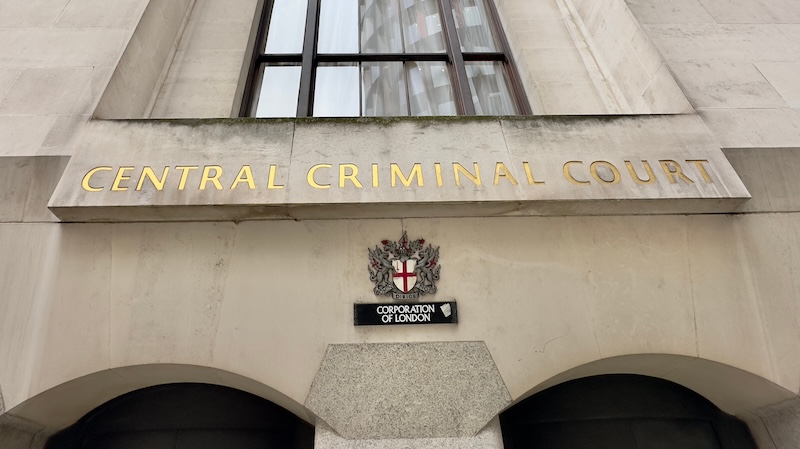
In late 2025, in light of the serious case backlog in the Crown Court, the Government commissioned Sir Brian Leveson to conduct an independent review of the criminal courts. Adopting Sir Leveson’s recommendations, the Government proposed the Courts and Tribunals Bill 2026 with the intent to reform the criminal justice system. However, the Bill has attracted widespread criticism across all corners of the legal industry. Legal practitioners associations, such as the Law Society, the Criminal Bar Association, voiced their objections on various grounds. However, the question remains as to what potential impact this Bill could have on defendants themselves?
The second reading of the Courts and Tribunal Bill occurred on 10 March 2026. The majority of the reforms proposed in the Bill were in accordance with the recommendations outlined by Sir Brian Leveson in his independent review of the criminal courts. There are principally five major reforms proposed under the Bill, which aims to reduce the backlog plaguing the judicial system. These reforms are as follows:
1. Removing the defendant’s right to elect for trial in the Crown Court for all triable either-way offences
2. Reforming the appeals process from the Magistrates’ Court to the Crown Court
3. Extending the Magistrates’ Court’s sentencing power to 18 months or 24 months for single triable either-way offences
4. Introducing a new Crown Court Bench Division to hear triable either-way cases likely to receive a custodial sentence of three years or less by judge alone
5. Introducing reforms to the law of evidence in sexual offences prosecutions
In reasoning this reform, the government cited that there were 79,619 open cases in the Crown Court as of September 2025, the number of which was forecasted to increase to 113,000 open cases in March 2029. The government was of the view that by reducing the number of cases being heard in the Crown Court with a jury, which had a longer hearing duration than those without it, would, on the one hand, free up the Crown Court’s capacity for hearing more cases, and on the other, allow cases to be heard more efficiently. In its reasoning, the government consistently reiterated the importance of efficient case management in delivering justice for victims.
Want to write for the Legal Cheek Journal?
Find out moreHowever, this proposed reform has faced much backlash since its inception. Most criticism was focused on the clause to remove the defendant’s right to elect for trial in the Crown Court for all triable either-way offences. By doing so, the Magistrates’ Court will decide whether they accept jurisdiction for the offence. Once they accept, the defendants can only be tried at the Magistrates’ Court. This means they cannot be tried with a jury. The effect of this clause is in essence removing jury trials for either-way offences unless the likely sentence constitutes more than three years of imprisonment. In particular, the government emphasised the impact of timesaving by removing jury trials for either-way offences. However, certain think tanks, such as the Institute of Government, estimated the removal of jury trials will only save less than 10% of the Court’s time. They further pointed out that productivity, rather than jury trials, is the major cause of the current criminal justice system delay. While a structural reform may be necessary to reduce the backlog, the focus of it should be improving the overall productivity of the system instead abolishing jury trial for either-way offences, which should ostensibly be a last resort.
Moreover, reallocating the cases from the Crown Court to the Magistrates’ Court is simply shifting the problem to a lower level court instead of solving the root cause of the issue. In their reform, the government failed to propose how the Magistrates’ Court will be supported after they are inundated with a sudden surge in caseload, many of which may be cases the Magistrates’ Court are unfamiliar with. The Magistrate Courts will need more time to familiarise themselves with the legal framework of the more serious crimes. Not only can the matter of the backlog not be solved immediately, but the situation may in fact only worsen. Given the urgency of the current situation, such a reallocation of time seems unnecessary.
Despite such criticism, there is a consensus is that the current criminal justice system is in crisis with its backlog and forecasted increase in workload. The Government rightly pointed out that delay in the criminal court causes great distress to the victims and their families, and that it is important to bring timely justice to victims. However, this should not be done on the basis of compromising the rights of the defendants, especially when the root cause lies in the system.
Want to write for the Legal Cheek Journal?
Find out moreWhen defendants elect to be tried at the Crown Court for either-way offences, not only are they subject to trials with jury, they are also more likely to be eligible to receive legal aid. While the Magistrates’ Courts have a fixed income threshold, the Crown Court has a more accessible legal aid scheme, allowing more defendants to be eligible. Thus, if the more serious triable either-way offences are also exclusively heard at Magistrates’ Court, defendants are more likely to go unrepresented.
Unrepresented defendants are usually less familiar with court procedures and their own legal rights, and are hence unable to present evidence or defend themselves. This may result in disproportionate sentencing with regards to the extent of their actions. While this is not a direct consequence of the Bill, it is an inevitable result which should be taken into consideration.
Moreover, unfamiliarity with the court procedures may also delay the overall court process. The court will have to spend time to explain the procedures to the defendants, thus meaning that such an approach may ultimately be counter-productive in solving the court’s backlog problem.
Want to write for the Legal Cheek Journal?
Find out moreMoreover, placing the burden of eliminating case backlog on the Magistrates’ Courts may result in rushed justice. It was estimated that if the reform is to be executed, the workload of the Magistrates’ Court will increase by 10-15%. This means that the magistrates may have to speed up the trial process to prevent any further delay in the trial process, which may not be ideal for both the defendants and the victims. Court Watch London, a project which observes the operation of London’s Magistrates’ Court, noted that even under the current workload, the Magistrates’ Court often has to rush through the trial process without allocating enough time to each defendants to explain their mental state. This suggests that the defendants cannot always fully exercise their right to defend in the trial, even without the additional workload. Therefore, if the reform continues, the likelihood of defendants being subjected to procedural impropriety may increase. This, along with the lower rates of representation in the Magistrates’ Courts, meaning defendants may not be fully aware of their rights, will very likely result in the miscarriage of justice for the defendants. To ensure the reform does not compromise the defendants’ rights while trying to achieve justice for victims, the government needs to put in a place a better safeguards to ensure the Magistrates’ Courts are capable of handling the surge in caseload.
In supporting their proposal, the government cites the reasons for affording victims their well-deserved justice. However, it is questionable whether the reallocation of the more serious triable either-way offences necessarily provides victims with their well-deserved justice. The Court Watch London reported that, in trying to speed up the trial, the Magistrates’ Court sometimes only considered the victims’ statements briefly. If the victims’ situation is not given full consideration, it is likely that the defendants’ sentences may fail to reflect the full extent of their actions.
Moreover, not fully considering the victims’ statements also means that the victims’ experience is not emphasised during the process. In this regard, the reform falls short in achieving its objective.
Undoubtedly, the Bill addresses a critical condition of the current criminal justice system. The current backlog is an urgent situation that needs to be mitigated immediately. However, this should not be done at the expense of the rights of defendants. It also falls short to achieve justice for victims. Whether the actual legislation can effectively ease the backlog without compromising the rights of the defendants and victims remains to be seen.
Winnie Cheung is an LLM graduate from King’s College London.



A jury for an offence likely to receive under 3 years??? Seems to work fine without it here in Australia.
Oh great, glad you’ve authoritatively reviewed a large and representative sample of cases in Australia to enable you to draw that conclusion, and that you have properly applied the maxim that what works in Australia will work in the UK.