

Decision likely to come next year
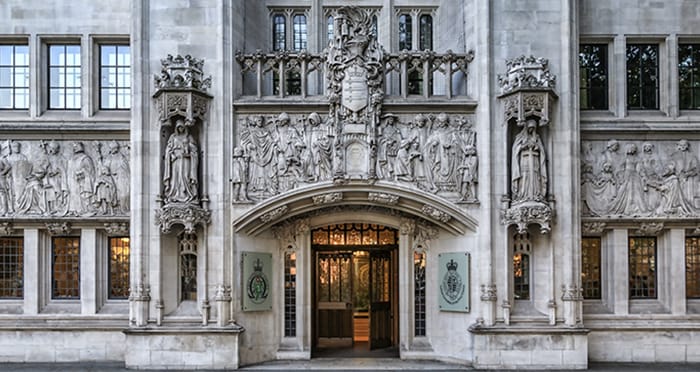
The UK Supreme Court has granted permission to hear Dr Stephen Thaler’s challenge to the UK Intellectual Property Office’s (UKIPO) decision not to allow two of his patent applications to list the AI creativity machine DABUS as the inventor.
In 2018, Thaler, who is a physicist and engineer, filed patents in several jurisdictions including the UK for two new inventions, the neural flame and the fractal container.
In these applications, Thaler is listed as the owner of the patents whilst his AI creativity machine known as DABUS is listed as the inventor. This is because he believes that DABUS has independently produced novel inventions.
The UK’s top court is expected to consider whether DABUS falls within section 7(3) of the UK Patents Act 1977 definition of an inventor (“the actual deviser of the invention”) and issue guidance on how this impacts who owns the patents in light of section 13(2) which provides that the default situation is that the inventor is the owner of the patent unless it is assigned to another entity.
If found to fall within the definition under section 7(3), the justices will be invited to consider whether an AI robot can be considered a legal person for the purpose of assigning ownership to Thaler. If successful, this would be the first meaningful example of when a robot being granted legal personhood in the world.
Thaler’s challenge was rejected by a majority in the Court of Appeal, upholding the UKIPO and High Court’s previous conclusions that “only persons can be inventors”. However, in his strong dissenting judgment Briss LJ held: “The fact that the creator of the inventions in this case was a machine is no impediment to patents being granted to this applicant”.
The UKIPO did not propose any changes to the law concerning AI-devised inventions in its response to a consultation on Artificial Intelligence and Intellectual Property published in June.
The Supreme Court’s decision is likely to be of international significance. Thaler has been working with an international team of patent lawyers to launch claims in jurisdictions across the world. His efforts thus far have enjoyed little success with his only major victory in the Federal Court of Australia last year being unanimously overturned in April by the country’s Full Court of the Federal Court.