

Further shake-up for top bench
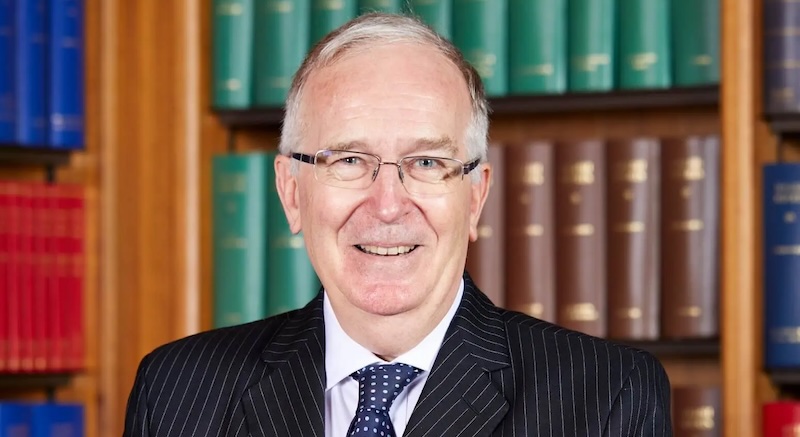
Lord Stephens has announced he will retire from the Supreme Court next year.
Lord Stephens has served as a Justice of the Supreme Court since 1st October 2020, having previously served as a Justice of the Judicial Committee of the Privy Council from 15th November 2017. He was appointed to the High Court in 2007 and to the Court of Appeal in 2017.
Called to the bar in Northern Ireland, England and Wales, and Ireland, Lord Stephens has had an unusually wide-ranging legal career spanning three jurisdictions. He retires on 7 April 2027.
Speaking on his retirement, Lord Stephens said:
“I have had the great honour of serving the citizens of the United Kingdom and the people of the Privy Council jurisdictions by upholding the rule of law. It has been a privilege to undertake this work, and an enormous pleasure to do this in collaboration with my colleagues on the Supreme Court, past and present. I will continue this work for the coming 11 months.”
It is expected that the Lord Chancellor will convene an independent selection commission to find his successor.
The announcement adds to a period of significant change at the top bench. Supreme Court president Lord Reed is also set to retire in January 2027, having served seven years in the role, while the court recently announced the appointment of Lord Justice Snowden, who is due to be sworn in next month.



Congratulations to Lord Stephens on his retirement, and I wish him all the very best for the future.
With a vacancy now opening on the Supreme Court, this would be a opportunity to improve diversity within the judiciary. When you compare the UK Supreme Court with the US Supreme Court, the contrast in representation is shocking, particularly given the UK’s reputation for being a progressive society.
The appointment of another woman would certainly be welcome, but the appointment of a woman of colour would represent a particularly meaningful step forward. Greater diversity on the bench brings broader perspectives and helps ensure that our highest court better reflects the society it serves.
Change in the UK can often feel slow, but many people will hope an appointment of this nature would move the Court towards a more representative future.
These vacuous diversity warriors are part of the reason punters are clamouring to vote Reform. No doubt the poster was too dumb to work out this vacancy is for the Northern Irish judge on the Court. They would knock back Keegan’s elevation just because she is not a “woman of colour”. In what planet would a judge of colour be representative of a nation that is 96% white?
Billy, Northern Ireland being around 97% White tells us something about Northern Ireland’s demographics, but it does not settle the question of whether the UK Supreme Court is representative of the society it serves. This is a UK-wide court whose decisions affect people across England, Scotland, Wales and Northern Ireland.
The issue is not whether an excellent Northern Irish lawyer should be appointed. Of course the appointment should be based on outstanding legal ability and experience. But the Court’s own appointment process recognises that diversity matters, and that where candidates are of equal merit it can properly be considered.
Nor did anyone say Lady Keegan, or anyone else, should be “knocked back” because she is not a woman of colour. That is a straw man.
The real question is this: if Northern Ireland being overwhelmingly White is enough for you to dismiss ethnic diversity entirely, do you also think a Supreme Court that appears to have only two women and no visible ethnic-minority justice is genuinely representative of the UK today?
Diversity is not some abstract slogan. Many people across the UK were born here, educated here, work here, pay taxes here, and serve their communities while also being people of colour. Our institutions are stronger, not weaker, when talented people from across the whole of society can see that the highest levels of public life are open to them.
Frankly, dismissing people of colour across the UK as somehow less representative of the society they belong to says more about your own assumptions than about the quality of any potential candidate.
But there is always a Northern Irish judge and two Scottish judges in the Supreme Court. This is a Northern Ireland only appointment. So the wider UK point is misguided.
A case could be made statistically for one ethnic minority judge from the 9 English judges. That would be representative of England and the UK. But I bet you would not want that to be the target would you?
When it comes to straw man arguments your last paragraph is an excellent example. Apparently not giving added advantages to minority ethnic candidates when applying somehow indicates a negative view of the quality of candidates from ethnic minorities. Social justice warrior logic at its best.
Actually, I would be happy to see even one ethnic minority justice on the UK Supreme Court. That alone would make the Court more reflective, inclusive, and diverse than it is now. My argument is not that the Court should become entirely ethnic minority, because that would simply create the same problem in reverse: a Court that does not reflect the realities of the UK.
What I am asking for is reasonable representation. In a Court of 12 justices, even one ethnic minority justice would still only represent a small minority of the bench. That is not excessive or radical; it is a modest step toward reflecting the society the Court serves. The same applies to women. If women make up roughly half the population, then it is reasonable to expect the highest court in the country to move closer to that reality over time.
This is why people need to talk and listen more. Calls for diversity are often misrepresented as demands to replace merit with identity, but that is not what I am saying. I still believe appointments should be based on excellence and legal ability. The point is that excellence exists across different backgrounds, and if the final court of appeal remains overwhelmingly drawn from one narrow demographic, it is fair to ask whether the system is recognising talent as widely and fairly as it should.
‘When you compare the UK Supreme Court with the US Supreme Court …’
I think you have said enough.
Or we could just appoint the best person for the job, irrespective of gender, race or other such protected characteristics.
If hiring were truly based only on merit, there would be far less need for diversity and inclusion initiatives. The issue is not that less qualified people should be chosen over more qualified people; I agree that the strongest candidate should get the job. The problem is that hiring does not always work that way in practice.
There is clear evidence that bias can affect recruitment, promotion, and workplace opportunity. Companies face discrimination claims precisely because hiring systems can exclude or disadvantage people based on race, gender, disability, age, or other protected characteristics rather than ability. Diversity and inclusion, when done properly, is not about lowering standards. It is about making sure standards are applied fairly, that qualified people are not overlooked, and that “merit” is not distorted by bias, networks, assumptions, or unequal access to opportunity.
Except there is absolutely no evidence that the Supreme Court appointment system – which in recent years has appointed Lady Simler, Lady Rose, Lady Arden and Lady Black – is biased, discriminatory or otherwise unfair in any material way.
In your original post, you called for the powers that be to appoint a woman (ideally a woman of colour)
You cannot simultaneously hold that position while also saying that “I agree that the strongest candidate should get the job.” That’s just contradictory Orwellian double-think. The best candidate this time might not be a woman. You have to pick a position and be consistent.
Now I am consistent. I want the best person appointed and, without any evidence to suggest otherwise, I accept that the individual appointed is the best person and celebrate that appointment accordingly, whether the appointee be Lady Simler or (as he soon will be) Lord Snowden.
I think the point is that if you have two equally meritorious candidates and one happens to be a POC, you give the job to that person to increase diversity.
NOT
You give the position to a less meritorious candidate because they happen to be a POC.